
All Topics Hub – Explore the Topics We Cover













Table of Contents
Easy Digital Tools for New Bloggers
In today's digital landscape, easy digital tools for new bloggers make launching a personal or income-generating blog more accessible than ever. Whether you're sharing travel stories from Kenya or tips on personal finance, platforms like AllTopicsHub.com empower beginners to express themselves without steep learning curves. The rise of blogging has exploded, with millions turning hobbies into passions or side hustles, but starting out can feel daunting.
New bloggers often grapple with overwhelming choices in beginner blogging software and simple blog setup tools. Deciding between free and paid options for platform selection, visual design, content editing, and idea generation adds to the stress. Yet, focusing on easy digital tools for new bloggers alleviates these hurdles. According to the Free Blogging Tools Guide, over 70% of beginners start with free options, like built-in editors in platforms such as WordPress.com, which handle basics without coding. These tools simplify workflows, letting you focus on creativity rather than tech woes.
This guide spotlights four key categories: platform and hosting for your blog's foundation, design tools for eye-catching visuals, editing software for polished posts, and planning aids for SEO and organization. When exploring the best free tools for content creation, options like Canva for graphics and Google Docs for writing stand out as no-cost starters. A later comparison table will help you evaluate fits.
Imagine turning your travel notes into a Kenya-focused blog without frustration. Let's start with the foundation: choosing your blog's home.
Quick Tool Category Summary
- Platform/Hosting: Free sites to launch quickly
- Design: Drag-and-drop visuals
- Editing: Simple text enhancers
- Planning/SEO: Idea generators and optimizers
Blogger: Free Platform for Quick Blog Launches
For new bloggers seeking easy digital tools for new bloggers, Blogger stands out as a no-cost blogging platform backed by Google. This user-friendly service allows beginners to launch a blog on topics like personal finance or travel guides without upfront hosting expenses, making it perfect for testing ideas in Kenya's growing digital scene.
Key Features
- Templates and Customization: Choose from hundreds of free, responsive templates and tweak colors, fonts, and layouts using a simple drag-and-drop interface--no coding required.
- Post Editor: The integrated WYSIWYG editor, one of the best free tools for content creation, supports rich text, images, and videos for seamless writing and formatting.
- Scheduling and Analytics: Schedule posts in advance and integrate Google Analytics to track visitor trends, helping optimize content for better reach.
- Mobile App: Manage your blog on the go with the Blogger mobile app, enabling quick edits and publishing from smartphones.
- Social Sharing: Built-in tools for sharing posts directly to social media platforms, boosting visibility among Kenyan audiences.
Pricing
Blogger is completely free, hosted on Google's reliable servers. For a professional touch, upgrade to a custom domain for about $10-15 per year through Google Domains or similar registrars.
Pros and Cons
Pros:- Extremely simple setup: Sign in with your Gmail account, pick a template, and start posting in minutes.
- Strong SEO benefits due to Google integration, with Blogger sites powering over 12 million active blogs worldwide.
- No technical hassle, ideal over self-hosted options for beginners.
- Automatic backups and reliable uptime.
- Limited plugins and advanced customizations compared to WordPress.
- Design options feel basic for growing blogs.
- Dependency on Google, which may limit full control.
- Ads from Google if you enable monetization early.
Best For
Blogger suits hobbyists and beginners in Kenya who want quick starts without tech barriers, exploring blog monetization strategies via integrated AdSense once traffic builds. A pro tip: It's easy to migrate to a self-hosted platform later as your audience grows. Once your blog is live, enhance visuals using tools like Canva for eye-catching graphics.
Canva: Simple Design for Blog Visuals
Among easy digital tools for new bloggers, Canva stands out as a no-skill design hub that empowers beginners to create stunning visuals effortlessly. Its intuitive platform lets you produce blog graphics, infographics, and social media assets without any prior design experience, fitting seamlessly into your content workflow.
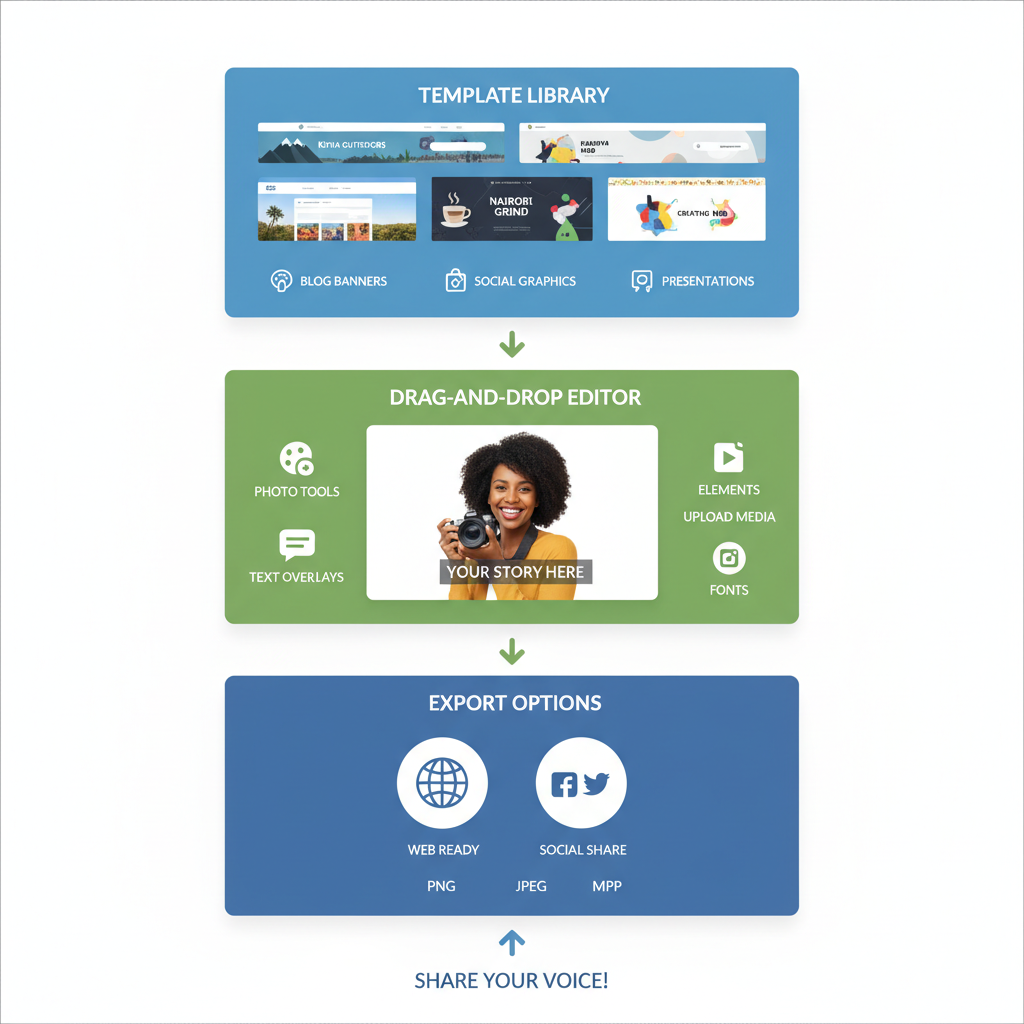
Canva's simple design process for creating blog visuals on a budget.
Features
Canva's robust features make it ideal for bloggers on a budget:
- Access thousands of free templates tailored for bloggers, positioning it among the best free tools for content creation with options like blog headers and Pinterest pins.
- Use the drag-and-drop editor to customize designs quickly; search
blog headerin the template library to start. - Edit photos with simple tools for cropping, filters, and text overlays to enhance your Kenya travel post thumbnails.
- Add basic animations for engaging social media assets, even touching on simple video elements via templates.
- Build brand kits to maintain consistent colors and fonts across your visuals.
Pricing
Canva offers a generous free core version for essential tools. Upgrade to Pro for $12.99 monthly to unlock advanced features like premium elements and background remover, gentle on Kenyan creators' tight budgets.
Pros and Cons
Pros:- Highly intuitive interface accessible to total beginners.
- Vast library of free stock images and templates speeds up creation.
- Powers 95 million designs monthly, proving its value for global creators.
- Free premium elements include watermarks, requiring Pro to remove.
- Limited advanced editing compared to professional software like Photoshop.
Best For
Canva excels for visual storytelling beginners crafting pins, headers, and infographics to boost blog engagement. Kenyan bloggers can create vibrant travel visuals without investing in expensive software, focusing on content that captivates audiences.
With designs ready, polish your writing using editing tools like Grammarly.
Grammarly: Essential Editing for Blog Posts
For new bloggers navigating the world of content creation, Grammarly stands out as one of the easy digital tools for new bloggers that simplifies editing. This AI-powered writing assistant acts like a personal coach, helping you craft error-free blog posts on topics like monetization strategies or tech reviews. Whether you're a beginner unsure about your writing skills, it boosts confidence by providing instant feedback to enhance clarity and engagement.
Key Features of Grammarly
Grammarly offers a suite of tools tailored for bloggers:
- Real-time grammar and spelling checks: Catches mistakes as you type, ensuring professional polish.
- Style improvements and vocabulary enhancements: Suggests concise phrasing and varied words to make your content more engaging, including SEO-friendly tips for better search visibility.
- Plagiarism checker: Scans your post to maintain originality, crucial for unique blog content.
- Tone detector: Analyzes the voice of your writing, helping adjust for a friendly or authoritative tone in travel or finance posts.
- Integrations: Works seamlessly with browser extensions, WordPress plugins, and a mobile app for editing on the go.
For example, when drafting a blog intro on blog monetization strategies for beginners, Grammarly might refine a clunky sentence like "Making money from blogs is hard but possible" to "Unlock beginner-friendly blog monetization strategies that turn passion into profit," improving readability instantly.
Pricing Options
Grammarly's free basic version handles essential grammar checks, making it one of the best free tools for content creation. Upgrade to Premium for $12 per month to access advanced features like full plagiarism detection and genre-specific suggestions.
Pros and Cons
Pros:- Highly accurate suggestions that reduce errors by up to 80% for non-native speakers, benefiting diverse Kenyan bloggers writing in English.
- User-friendly interface as an AI writing helper, perfect for quick edits without steep learning curves.
- Enhances privacy for sensitive content through secure cloud processing.
- Premium features require payment, limiting advanced tools behind a paywall.
- Occasional over-suggestions can feel intrusive during creative flow.
Best For
Grammarly is ideal for non-native English bloggers refining travel guides or personal finance posts. It elevates your writing quality, improving reader retention and search rankings. With polished content in hand, you're ready to organize ideas next using planning tools like Trello for a seamless workflow.
Trello: Organization for Content Ideas
Trello stands out as one of the easy digital tools for new bloggers, offering a visual task manager to streamline content planning. Its board-based system helps organize ideas, calendars, and workflows, making it ideal for niches like web hosting tutorials where structured ideation prevents chaos. New bloggers can quickly set up boards to brainstorm topics and track progress from draft to publish.
Features
Trello revolves around boards, lists, and cards for intuitive organization:
- Boards and Lists: Create a board for your blog's content calendar, with lists like 'Ideas', 'In Progress', and 'Published' to visualize the pipeline.
- Cards: Each card represents a blog post idea, including due dates and checklists to manage steps like research and editing.
- Labels and Attachments: Color-coded labels categorize posts, such as 'SEO' or 'Monetization', while attachments store images or outlines.
- Integrations and Power-Ups: Connect with Google Drive for seamless file sharing, and add power-ups for calendars or automation--perfect for online business tools beginners building workflows in business blogging.
Power-ups enable team collaboration for guest contributions, and free templates jumpstart editorial planning.
Pricing
Trello's free plan offers unlimited cards and up to 10 boards, sufficient for solo users. The Business Class upgrade costs $10 per user per month, unlocking advanced automation and more power-ups.
Pros and Cons
Pros: Highly visual and flexible, fostering creativity without rigid structures; boosts productivity by 30% for creators, as noted in blogging tool overviews; supports collaboration for scaling blogs.Cons: Free version limits power-ups, which can hinder advanced scheduling; boards may clutter if not maintained, so start simple to avoid over-complication.
For planning sponsored posts under blog monetization strategies for beginners, use labels to flag opportunities and integrate with content workflow managers.
Best For
Trello excels for solo bloggers juggling ideas and deadlines as an easy digital tool for new bloggers. It answers how to generate content ideas using tools by enabling brainstorming boards and lists free tools for social media content creation through scheduling power-ups.
Sample Board Setup for Monthly Posts: Board 'October Content' with lists 'Brainstorm', 'Drafting', 'Review', and 'Live'. Add cards like 'HostGator Review' with due dates and attachments.
Now, see how these stack up side-by-side in the comparison table.
Comparing Essential Blogging Tools
When starting with easy digital tools for new bloggers, selecting the right ones can streamline your workflow and boost productivity without overwhelming costs. This comparison focuses on four essentials--Blogger, Canva, Grammarly, and Trello--evaluating key features, pricing, ease for beginners, and best use cases to help you decide based on your needs, like creating visual-heavy Kenya travel content.
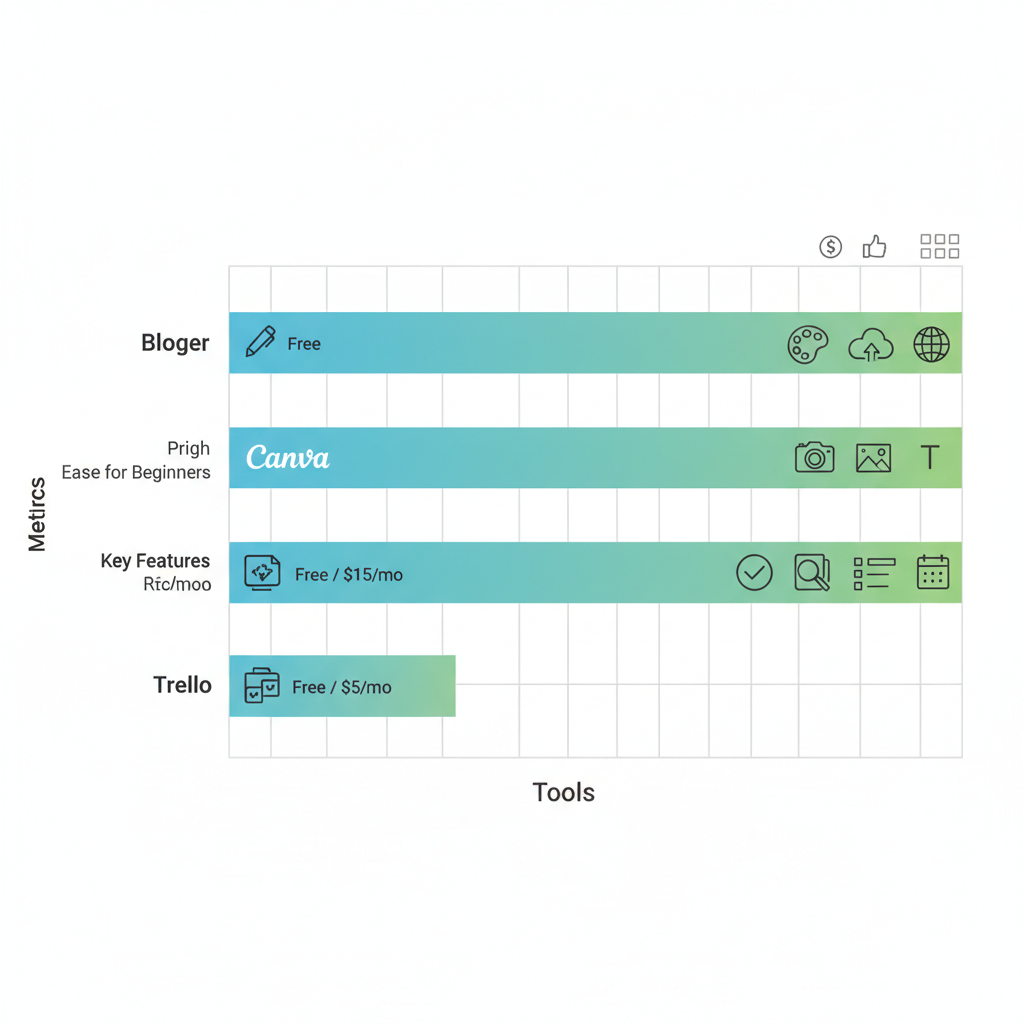
Comparison of essential blogging tools for new creators
The following table summarizes these tools, drawing from 2024 data for accuracy:
| Tool | Key Features | Pricing | Ease for Beginners | Best Use Case |
|---|---|---|---|---|
| Blogger | Google integration, templates, mobile app | Free | High (no coding) | Platform setup |
| Canva | Drag-drop design, templates, stock assets | Free/Pro $12.99/mo | Very High | Visual creation |
| Grammarly | Grammar checks, tone analysis, integrations | Free/Premium $12/mo | High | Writing polish |
| Trello | Boards, cards, power-ups, collaboration | Free/Business $10/user/mo | Medium | Idea management |
Blogger stands out as the top free option for platform setup, offering zero-cost entry ideal for Kenyan beginners with budget constraints. As the best free tools for content creation, its high ease makes it perfect for quick starts. Canva excels in visual design with very high beginner-friendliness, while Grammarly polishes writing effectively. Trello suits organization but requires more setup. Free tools like these drive 60% higher engagement, per creator guides. For simple online side hustles, pair Blogger with Grammarly to support blogging for income through polished, ad-friendly posts. Bold picks: Blogger for budgets, Canva for visuals. Armed with these comparisons, reflect on your blogging path ahead.
Building Your Blog with the Right Tools
As you wrap up your blogging journey, remember the power of easy digital tools for new bloggers. Platforms like Blogger offer a free, user-friendly foundation for publishing, while Canva simplifies eye-catching visuals without design expertise. Grammarly polishes your writing for professionalism, and Trello streamlines content planning with intuitive boards. These best free tools for content creation create a seamless workflow, allowing beginners to focus on creativity rather than technical hurdles.
To turn your passion into profit, explore blog monetization strategies for beginners early. Even without massive traffic, you can earn through affiliate marketing tips by partnering with programs like Amazon Associates or ClickBank, recommending products via high-quality posts. Integrating ads becomes straightforward with tools ensuring polished content; discover effective content monetization methods for seamless ad placement. According to industry insights, tools like these help 40% of new blogs monetize in their first year, proving make money from home is achievable despite ai online jobs impact.
Start small by mastering one tool, like Trello for organization, and commit to consistent posting. This builds a strong online presence and boosts SEO through optimized elements like meta description writing, especially in Kenyan markets where local topics resonate. Regular use grows your audience organically.
To kickstart your journey with these tools, explore more resources at AllTopicsHub.com and launch your blog today.