The Rise of Eco-Friendly Packaging: Trends and Opportunities in 2025
Introduction
In recent years, eco-friendly packaging has transformed from a niche concern to a mainstream demand. By 2025, the global push for sustainable practices has made eco-friendly packaging one of the fastest-growing sectors, especially for businesses looking to align with environmentally conscious consumers.
This article will explore the rise of eco-friendly packaging, the key trends shaping its growth, challenges and opportunities, and how businesses can capitalise on this momentum.
Understanding Eco-Friendly Packaging
Eco-friendly packaging refers to the use of materials and processes that reduce environmental impact. This includes:
- Biodegradable and compostable materials
- Recyclable and reusable designs
- Minimalist packaging to reduce waste
- Production processes that limit carbon footprints
With increasing consumer awareness and regulatory pressure, companies are rethinking their packaging strategies to meet sustainability goals.
Market Growth and Potential
As of 2025, the global eco-friendly packaging market is projected to exceed $340 billion, growing at an impressive rate of over 7% annually. Factors driving this growth include:
- Consumer demand for sustainable products
- Corporate responsibility initiatives
- Government regulations banning single-use plastics
Startups and SMEs are finding new opportunities as big brands look for innovative, green packaging solutions.
- Trends Shaping Eco-Friendly Packaging in 2025
- a) Biodegradable Innovations
Advanced materials such as PLA (Polylactic Acid), derived from cornstarch, and PHA (Polyhydroxyalkanoates) are revolutionising packaging.
- b) Minimalist Designs
Consumers prefer simple, minimal designs that reflect eco-conscious values.
- c) Edible Packaging
A niche but growing trend, particularly in food service sectors.
- d) Smart Sustainable Packaging
technology integration for tracking and verifying the sustainability of packaging materials.
(Image 2: AI-generated image showing modern minimalist packaging with eco symbols and smart tracking features)
Challenges in Eco-Friendly Packaging
While the sector is booming, it faces several challenges:
- Cost: Sustainable materials can be more expensive.
- Durability: Some biodegradable materials lack the durability of traditional plastics.
- Infrastructure: Recycling systems are not universally equipped to handle new materials.
- Consumer education: Not all consumers understand disposal processes.
However, these challenges present opportunities for innovation and differentiation.
- Opportunities for Businesses
- a) Niche Branding
Brands that embrace eco-friendly packaging position themselves as leaders in sustainability.
- b) Cost Savings in the Long Term
Bulk sourcing and advancements in materials technology will eventually reduce costs.
- c) Regulatory Incentives
Governments are offering tax incentives and grants for sustainable initiatives.
- d) Consumer Loyalty
Eco-conscious consumers are more likely to become repeat buyers.
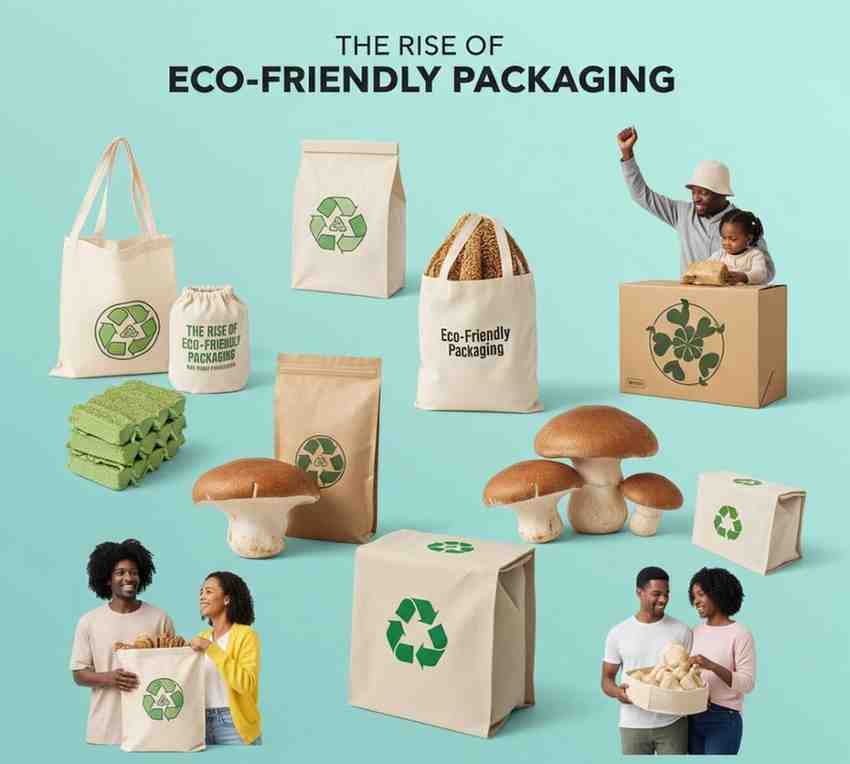
- Case Studies of Success
Company A: Sustainable Cosmetics Brand
Adopted 100% biodegradable packaging and saw a 30% increase in sales in one year.
Company B: organic food Startup
Used compostable wrappers, which led to viral social media traction.
Company C: subscription box Service
Shifted to recyclable materials and earned national eco-certification.

(Image 3: AI-generated image depicting various eco-packaging success stories cosmetics, food boxes, subscription packaging)
- How to Transition to Eco-Friendly Packaging
- Audit Current Packaging: Identify areas for sustainable improvement.
- Partner with Green Suppliers: Source verified eco-friendly materials.
- Educate Consumers: Use packaging to explain disposal methods.
- Invest in R&D: Stay ahead with innovative material solutions.
- Promote Sustainability: Highlight efforts in marketing and branding.
- Future Outlook
As consumer demand and environmental urgency continue to rise, eco-friendly packaging is set to become the standard rather than the exception. Businesses that move quickly will not only align with global sustainability goals but also gain a competitive advantage.

Conclusion
Eco-friendly packaging is more than just a trend it's the future of responsible business. By understanding the landscape, leveraging opportunities, and committing to sustainable practices, businesses can thrive in the green revolution of 2025.



Traffic Coop Earnings
Ready to Monetise Your Traffic?
Stop letting your visitors slip away without value. With the LeadsLeap Co-op, you can turn every click into income. Join through my link below and I’ll personally share my tips for getting started fast.
Join My LeadsLeap Co-op Now