
How to Consistently Earn Money With Forex
The Complete Strategic Guide to Sustainable Trading Success

Forex trading attracts millions of people worldwide because it promises flexibility, independence, and the possibility of financial growth from anywhere with an internet connection. Unlike traditional investing, the foreign exchange market operates twenty-four hours a day, allowing traders to participate regardless of location or schedule. However, while many enter the market hoping for rapid profits, only a small percentage achieve consistent results.
The difference between struggling traders and consistently profitable ones is not intelligence, luck, or secret indicators. It is structure, discipline, and understanding how markets actually behave. Consistency in Forex trading comes from repeatable processes rather than occasional winning trades.
This comprehensive guide explains how traders can build a reliable framework for earning steady returns. You will learn how markets move, how professional traders manage risk, and how to develop systems that prioritise long-term survival over short-term excitement. If you are new, begin by understanding the fundamentals outlined in Forex trading for beginners, then return here to deepen your strategic approach.
By the end of this guide, you will understand not only how to trade Forex but how to think like a consistent trader.
Understanding Forex Market Behaviour and Why Most Traders Fail
Before discussing profitability, it is essential to understand how the Forex market functions beneath the surface. Currency prices do not move randomly. They react to liquidity, institutional positioning, macroeconomic expectations, and trader psychology.
The Structure of the Forex Market
The Forex market is decentralised, meaning trades occur through a global network of banks, institutions, brokers, and retail traders rather than a single exchange. Major participants include:
- Central banks managing monetary policy
- Commercial banks facilitating international transactions
- Hedge funds and institutional traders seeking speculative gains
- Retail traders participating through online brokers
Retail traders represent a small portion of overall volume, which means price movements are largely driven by institutional liquidity. Understanding this reality shifts your mindset from prediction to reaction.
Why Most Traders Lose Money
Inconsistent traders commonly fall into predictable traps:
- Overtrading without a defined system
- Risking too much capital per trade
- Chasing losses emotionally
- Ignoring market structure
- Expecting instant profits
Many beginners also misunderstand leverage, believing it increases opportunity without recognising how quickly it amplifies losses. Articles like trading Forex explained help clarify these foundational realities.
Consistency begins when traders stop trying to win every trade and instead focus on protecting capital while executing high-probability setups repeatedly.
Building a Strong Educational Foundation Before Trading Real Money
Education remains the single most important investment a trader can make. Without structured learning, trading becomes gambling disguised as analysis.
Core Knowledge Every Trader Must Master
To build consistency, traders should understand five essential pillars:
- Currency pair relationships and volatility behaviour
- Market sessions and liquidity cycles
- Technical analysis fundamentals
- Macroeconomic influences on currencies
- Risk management mathematics
Begin practising concepts using simulated environments described in starting a Forex trading business, where demo trading helps refine execution without financial pressure.
Technical Analysis Foundations
Technical analysis allows traders to interpret price behaviour using charts. Instead of predicting the future, technical analysis identifies probability zones where reactions are likely.
Key concepts include:
- Support and resistance levels
- Trend identification
- Candlestick behaviour
- Momentum indicators
- Market structure shifts
A deeper understanding of entries can be explored in trade entries explained, which details how timing affects profitability.
Fundamental Analysis Essentials
Currency values respond to economic strength. Traders must monitor:
- Interest rate decisions
- Inflation reports
- Employment data
- Geopolitical developments
- Central bank guidance
For example, sentiment surrounding emerging economies often drives volatility, as illustrated in Turkish lira market sentiment analysis.
Combining technical and fundamental perspectives creates balanced decision-making rather than relying on indicators alone.
Developing a High-Probability Trading Strategy That Produces Consistency
A trading strategy is not simply an entry signal. It is a complete decision framework defining when to trade, when not to trade, and how risk is managed.
Choosing the Right Trading Style
Consistency improves when trading style matches personality and schedule:
- Scalping: rapid trades requiring constant attention
- Day trading: positions closed within the same session
- Swing trading: trades held for days or weeks
- Position trading: longer-term macro opportunities
Part-time traders often succeed more with swing trading because it reduces emotional pressure and noise.
Backtesting and Strategy Validation
Professional traders validate strategies before risking money. Backtesting evaluates how rules perform historically, while forward testing confirms performance in live markets.
Your strategy should define:
- Entry conditions
- Stop-loss placement
- Take-profit targets
- Risk percentage
- Market conditions to avoid
Consistency comes from executing rules repeatedly rather than improvising during trades.
Understanding Risk-Reward Ratios
A sustainable system typically targets at least a 1:2 risk-reward ratio. This allows profitability even if fewer than half of trades win.
Many traders attempting aggressive returns ignore this principle, leading to account instability. Balanced expectations, discussed further in can you make a living in Forex, help traders align goals with realistic outcomes.
Risk Management: The True Secret Behind Consistent Forex Profits
Risk management is the defining characteristic separating professionals from amateurs. Successful traders focus more on loss control than profit size.
The 1-2% Risk Rule
Most experienced traders risk only a small portion of capital per trade. This ensures survival during inevitable losing streaks.
- Risk 1-2% per trade
- Avoid increasing risk after losses
- Maintain consistent position sizing
Using Stop Losses Effectively
Stop losses protect accounts from catastrophic drawdowns. Placement should be based on market structure rather than arbitrary numbers.
Managing Leverage Wisely
Leverage magnifies exposure. While brokers advertise high leverage, consistent traders use conservative levels to maintain stability.
Understanding multipliers and exposure effects is explained further in Forex multipliers explained.
The Psychology of Consistent Traders
Trading success depends heavily on mental discipline. Emotional reactions frequently destroy profitable systems.
Common Psychological Challenges
- Fear of missing out (FOMO)
- Revenge trading after losses
- Overconfidence during winning streaks
- Impatience during slow markets
Professional traders treat trading as probability management rather than personal validation.
Building Emotional Discipline
Practical habits include:
- Following a written trading plan
- Taking scheduled breaks
- Reviewing trades objectively
- Accepting losses as operational costs
Humour and community interaction can also help maintain emotional balance, which is why many traders relate to content like memes for every trader.
Money Management and Account Growth Strategies
Consistent income does not come from large trades but from structured account growth.
Compounding Returns
Small, steady gains compound significantly over time. A trader achieving modest monthly growth can double an account within a year through disciplined execution.
Diversifying Currency Exposure
Trading multiple correlated pairs increases risk unintentionally. Understanding correlations helps maintain balanced exposure.
Tracking Performance with a Trading Journal
A journal records:
- Entry reasoning
- Market conditions
- Emotional state
- Outcome analysis
Reviewing this data reveals behavioural patterns that charts alone cannot show.
Advanced Techniques Used by Consistent Forex Traders
Once foundational skills stabilise performance, traders can incorporate advanced methods.
Market Structure Analysis
Understanding higher highs, lower lows, and liquidity zones improves timing accuracy and reduces false entries.
Session-Based Trading
Different sessions exhibit distinct behaviour:
- Asian session - slower movement
- London session - strong momentum
- New York session - volatility spikes
News Event Strategies
Economic releases can create high-probability setups when volatility aligns with technical levels.
Automation and Trading Tools
Some traders integrate automated systems to execute rules consistently while removing emotional interference.
Choosing the Right Broker and Trading Environment
Your broker significantly influences execution quality and overall performance.
- Verify regulatory licensing
- Compare spreads and commissions
- Test platform stability
- Ensure reliable withdrawals
A secure trading environment reduces operational risk and allows traders to focus on strategy execution.
Common Mistakes That Destroy Forex Consistency
- Switching strategies frequently
- Trading without confirmation
- Ignoring risk management rules
- Overleveraging accounts
- Following unverified online signals
Many traders also fall for unrealistic income promises. Comparing promotional claims critically, as discussed in affiliate binary options comparisons, helps traders avoid misleading expectations.
Realistic Growth Timeline for Forex Traders
Consistency develops gradually:
- Months 1-3: Learning fundamentals
- Months 3-6: Strategy testing
- Months 6-12: Emotional discipline development
- Year 1+: Stable execution and scaling
This timeline emphasises patience. Traders seeking instant results often abandon strategies before they mature.
Long-Term Mindset: Turning Trading Into a Sustainable Income Skill
Forex trading should be viewed as skill acquisition rather than speculation. Long-term traders prioritise:
- Process over profits
- Consistency over excitement
- Risk control over aggressive growth
Many eventually expand knowledge into broader investing opportunities such as property investment, illustrated in buying land as an investment, demonstrating how trading profits can support diversified wealth building.
Conclusion: The Real Path to Making Consistent Money With Forex
Making consistent money with Forex trading is achievable, but only through structured education, disciplined execution, and realistic expectations. The market rewards patience, preparation, and emotional stability far more than aggressive risk-taking.

By focusing on:
- Continuous learning
- High-probability strategies
- Strict risk management
- Emotional discipline
- Long-term growth thinking
traders can gradually transition from inconsistent results to sustainable profitability.

Start small, practise consistently, analyse every trade, and refine your system over time. Forex success is not defined by one winning trade but by hundreds of disciplined decisions executed correctly.



Recommended Affiliate Resources







You May Also Like

How to Start Forex Trading Business
Forex trading has evolved from an exclusive institutional activity into one of the most accessible online…
Read More »
Earning Serious Money with MetaTrader 4
MetaTrader 4 (MT4) has remained one of the most trusted trading platforms in the financial markets for more…
Read More »
Earning Serious Money with MetaTrader 5
MetaTrader 5 (MT5) has become one of the most powerful trading platforms available for modern financial…
Read More »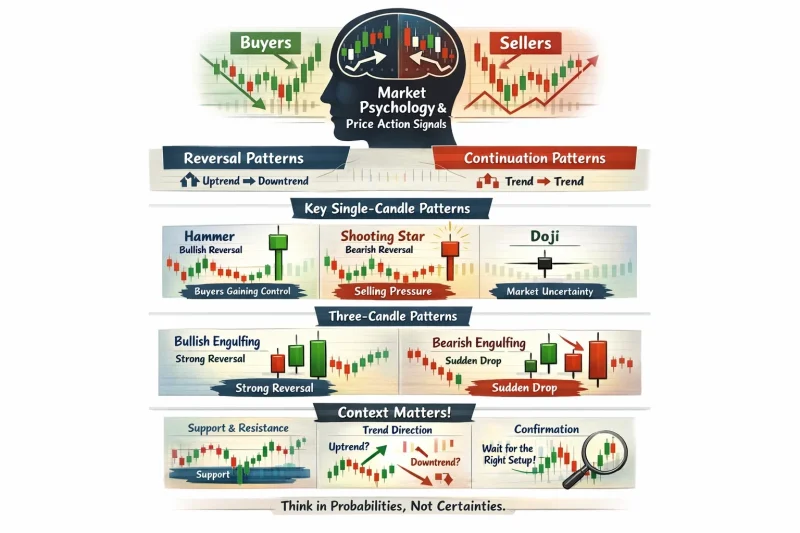
Candle Patterns & High-Probability Trading Strategies
Financial markets move in patterns shaped by human behaviour, liquidity, institutional participation, and…
Read More »
Why Forex Feels Like an Emotional Rollercoaster
Anyone who has dipped their toes into forex trading knows the experience is far from smooth. One moment…
Read More »
Forex Trading Mood Swings: Memes for Every Trader
Forex trading is not just about charts, candlesticks, and economic calendars. It's also about the emotional…
Read More »Traffic Coop Earnings
Ready to Monetise Your Traffic?
Stop letting your visitors slip away without value. With the LeadsLeap Co-op, you can turn every click into income. Join through my link below and I’ll personally share my tips for getting started fast.
Join My LeadsLeap Co-op Now
About the Author
Hello, I'm Patrick Wilson — an entrepreneur, artist, and storyteller driven by curiosity and passion. Through this blog, I explore and share meaningful content around a wide spectrum of lifestyle and success topics that matter to everyday people looking to live better, earn more, and grow intentionally.
From building a personal brand and making money online through proven digital strategies, to navigating the journey of personal finance and wealth-building — I bring real-world insights and tools to help you take control of your financial future.
I also document my pursuit of a healthy, balanced life — sharing inspiration around achieving fitness goals and living with purpose. As someone who appreciates both the aesthetic and the soulful, I dive deep into fine art, cultural history, and the enriching nuances of everyday lifestyle.
Whether I'm exploring breathtaking travel destinations across the globe or tending to the joys of home and garden, I aim to bring beauty, clarity, and useful ideas to every post.
If you're passionate about growth — financially, creatively, or personally — this blog is designed to inspire and support your journey.
Thanks for being here — let's grow together.