
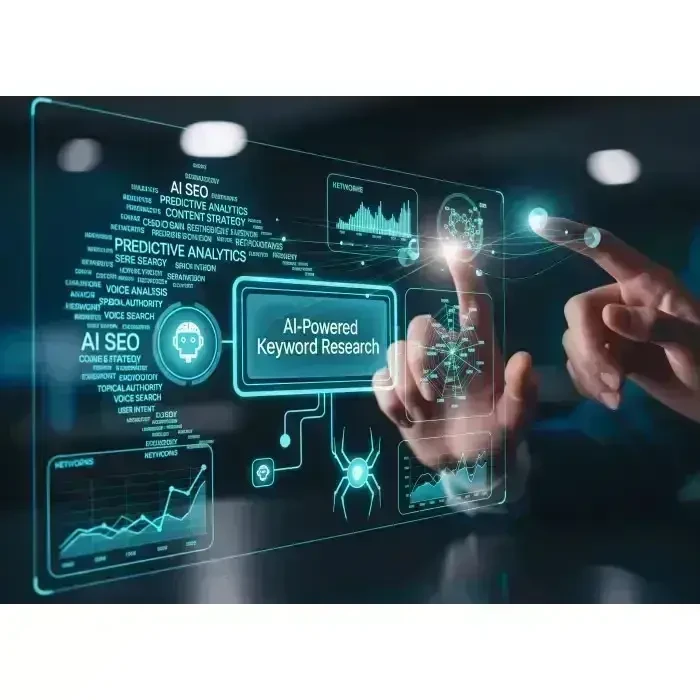
AI-Powered Keyword Research: The Future of SEO Strategy in 2026
Search engine optimisation has always been rooted in one core principle: understanding what people are…
Read More »
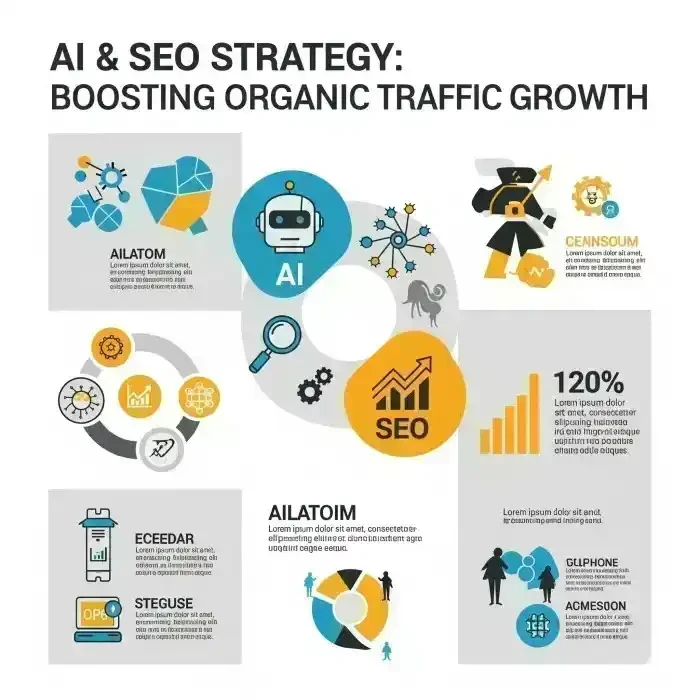
In today's digital landscape, search engines are no longer the simple keyword matchmakers they once were. Google, Bing, and other platforms have adopted artificial intelligence (AI) to refine how they rank, index, and deliver results. For online businesses, bloggers, and entrepreneurs, this means that SEO strategy must evolve. It's no longer enough to stuff articles with keywords or chase backlinks without context. To truly boost organic traffic growth, you need to understand how AI shapes search--and how to use it to your advantage.
Artificial intelligence is at the heart of almost every major search engine update in the last decade. Consider Google's RankBrain, BERT, and MUM algorithms--all of them use machine learning and natural language processing (NLP) to interpret content in ways that mimic human understanding. This is a game changer for SEO because:
In short, SEO has shifted from a purely technical game to a holistic strategy that balances keywords, quality, authority, and human experience.
To appreciate how much things have changed, let's briefly compare old SEO tactics with today's AI-driven expectations:
The shift is clear: content that feels robotic is penalised, while content that mimics human conversation is rewarded. Ironically, AI has made SEO more human-focused than ever.
AI-powered algorithms analyse billions of web pages and user behaviours every day. Here's what that means for your SEO strategy:
This sophistication means that AI rewards high-quality, evergreen content that solves problems and builds trust, while punishing shallow, manipulative, or duplicated work.
Because AI is complex, myths spread quickly. Let's debunk a few that often mislead content creators:
Clearing these misconceptions helps you focus on strategies that actually move the needle for organic growth.
Let's make this real with a story. Imagine Sarah, a food blogger who built her site in 2014. Back then, she relied on keyword-heavy recipe titles, link exchanges with other bloggers, and frequent posts stuffed with long-tail phrases. It worked--for a while. Her blog got thousands of visits a day. Then, around 2019, her traffic nosedived. Why? Because Google's AI updates stopped rewarding her "keyword salad" posts. Instead, newer blogs that provided clearer, more structured, and user-friendly content began outranking her. Sarah hadn't adapted to AI-driven SEO. She had relied on outdated methods, and it cost her dearly. Today, bloggers like Sarah must learn to optimise for intent and user experience. AI rewards sites that evolve, not those stuck in the past.
If you're new to AI-driven SEO, here's a simple roadmap to begin with:
By starting here, you'll be miles ahead of those still clinging to outdated SEO hacks.
At the end of the day, SEO is about visibility. The more visible your site, the more organic traffic you attract. With AI driving search, the bar for visibility has risen. Content that fails to align with AI's understanding of quality will struggle to rank. On the flip side, content that embraces these changes will enjoy sustainable, compounding traffic growth. Think of AI as a filter. It weeds out the noise and highlights the content that provides real value. The goal is simple: if you want more traffic, create content that AI recognises as valuable to humans. Do that consistently, and organic growth will follow naturally.
We've now established why AI is central to SEO and how it has reshaped the rules of ranking. From search intent to entity recognition, AI is changing the game--and those who adapt will thrive. In the next phase, we'll dive deeper into how to build an AI-optimised SEO strategy step by step, complete with actionable techniques you can apply to your website today.
Now that we've explored how AI is reshaping search, it's time to get practical. How do you actually build an SEO strategy that takes advantage of artificial intelligence instead of being left behind by it? The good news is that AI doesn't just change the rules--it also provides tools and opportunities for creators, businesses, and entrepreneurs to thrive.
Traditional keyword research was all about volume--finding high-traffic keywords and stuffing them into your content. In today's AI-powered landscape, that approach is ineffective. Search engines don't just match keywords; they evaluate semantic meaning and intent. This means your strategy must shift to identifying:
Tools like
, Ubersuggest , and leverage AI to identify these clusters. But don't stop there--look at "People also ask" and "Related searches" sections in Google to understand how AI interprets the query ecosystem.AI-driven search favours sites that demonstrate authority on a topic. One blog post isn't enough--you need topic clusters. Here's how it works:
This approach shows search engines that your site is a credible resource. Instead of being one blog among millions, you become a knowledge hub for a niche.
AI has shifted search from "keyword match" to "intent match." To win in organic rankings, you must answer the why behind the search. Let's break down the three main types of intent:
By aligning content with the right intent, you dramatically improve both engagement metrics and rankings, since AI measures how satisfied users are with your answer.
AI doesn't just affect how search engines rank--it also powers the tools that can help you rank better. Consider integrating:
But remember: these tools provide guidelines, not gospel. AI gives you insights, but human creativity and storytelling keep your content unique and engaging.
Search engines measure user satisfaction as part of their AI-driven ranking. Here are the main UX factors to focus on:
UX is not just design--it's part of SEO. The better the experience, the more AI rewards your site.
AI-driven search loves freshness. Outdated content gets pushed down unless it remains relevant. That's why you must adopt a refresh cycle:
Refreshing signals to AI that your site is active and authoritative, boosting your organic reach.
Backlinks remain a ranking factor, but AI evaluates their quality. Instead of chasing hundreds of low-value links, focus on:
AI tools such as
can help identify high-value opportunities. Even better, create content so valuable that people naturally link to it--AI will amplify this organic linking behaviour.Consider a small e-commerce startup selling eco-friendly kitchenware. At first, they published random product blogs that went nowhere. After adopting an AI-powered SEO strategy, they:
Within a year, their organic traffic tripled. They ranked not just for individual keywords, but for entire semantic themes. This is the power of combining AI insights with human creativity.
With AI assistants like Siri, Alexa, and Google Assistant, voice search is exploding. Voice queries are longer, more conversational, and often framed as questions. To optimise:
By making your content voice-search friendly, you capture traffic that many competitors overlook.
Analytics in the AI era go beyond page views. Key metrics include:
AI doesn't just track what users do--it interprets whether they found value. Focus on metrics that reflect satisfaction, not vanity.
Building an AI-optimised SEO strategy is about blending technology and humanity. AI tools help you uncover insights, but the real growth comes from creating content that connects, informs, and inspires. From keyword research and topic clusters to UX improvements and voice optimisation, these steps form the backbone of modern organic growth. In the final phase, we'll dive into the future of AI in SEO--where search is heading, what to expect in the next five years, and how to future-proof your site against constant changes.
We've explored how AI reshapes search and how you can apply AI-driven strategies right now. But SEO is never static--it evolves alongside technology and user behaviour. To build long-term organic traffic growth, you must understand where AI is taking SEO and prepare your site for future challenges and opportunities.
Search engines are no longer just indexes of web pages. With AI, they're becoming answer engines. Google, Bing, and even smaller players like Perplexity AI are experimenting with direct answers in the search results, summarising content without users clicking through. This means two things for SEO:
If your site provides surface-level information, AI may summarise it away. But if your content delivers unique insights, stories, and experiences, search engines will still direct users to your pages.
AI writing tools are everywhere. While they can help with outlines, research, and editing, Google's algorithms are designed to detect content that lacks originality, depth, or E-E-A-T (Experience, Expertise, Authoritativeness, Trustworthiness). Going forward, content that performs best will:
In short: AI content may get you started, but humanised content keeps you ranking.
AI is expanding search beyond text. By 2030, a significant share of searches will be voice-driven, image-driven, or multimodal (a combination of text, images, and voice).
These shifts reward websites that think beyond text and build a rich, multimedia content strategy.
AI is making search more personalised than ever. Instead of one-size-fits-all rankings, results are tailored to the user's history, preferences, and behaviour. This means two people searching the same query could see different results. Future SEO will include predictive content: creating resources before users even realise they need them. For example, a fitness site might anticipate seasonal interest in "home workout challenges" before January resolutions kick in. AI analytics tools already provide predictive insights. The winners will be those who act early, shaping their content calendars around emerging trends rather than chasing them after the fact.
AI brings opportunities--but also risks. Some marketers are tempted to mass-produce low-quality content or manipulate AI-driven search with spammy tactics. But this short-term thinking backfires. Search engines constantly update algorithms to penalise manipulation. Key risks to avoid:
SEO in the AI era is about balance--using automation wisely while protecting your brand's authenticity.
In the future, success won't come from guessing what works. AI-driven analytics will provide precise answers. Already, platforms like Google Analytics 4, Ahrefs, and SEMrush are integrating predictive AI to:
The smart move is to invest in data literacy now. Learn how to interpret AI analytics, so you can adjust strategy quickly when opportunities appear.
With all the rapid changes, one question remains: how can you future-proof your SEO so you're not rebuilding from scratch every year? Here are strategies that will stay relevant no matter how AI evolves:
Trends will come and go, but providing value, clarity, and trust is timeless.
Based on current trends, here's what we can expect:
The businesses that adapt fastest will capture market share while competitors scramble to keep up.
Take the example of a travel blogger in 2026. Instead of simply writing destination guides, she:
As AI summaries become more common, her posts still attract clicks because they provide something irreplaceable--authentic experience and depth.
AI may feel intimidating, but it's not the death of SEO. It's a transformation. Those who resist it risk being left behind, while those who embrace it thoughtfully will unlock unprecedented growth. The secret is balance: leverage AI for efficiency and insights, but anchor your strategy in human creativity, empathy, and storytelling. That's the formula that will keep you ranking--today, tomorrow, and five years from now.
AI doesn't replace human-driven SEO--it amplifies it. The future belongs to creators and businesses who blend the two seamlessly.
AI is rewriting the rules of search. To boost organic traffic growth, you must build a strategy that combines AI-powered insights with authentic, evergreen, human-first content. By adapting to AI-driven algorithms, preparing for voice and visual search, and doubling down on brand trust and user experience, you'll not only survive the AI revolution--you'll thrive in it.
Search engine optimisation has always been rooted in one core principle: understanding what people are…
Read More »
When I first launched my website, I was ecstatic. Every new blog post I published seemed to appear almost…
Read More »
Affiliate marketing has evolved from a simple referral system into one of the most powerful online income…
Read More »
SEO has always felt like chasing a moving target. Some days, it seems like you've cracked the code -- your…
Read More »
The rise of artificial intelligence has sparked fear, confusion, and endless debates across the online world.…
Read More »
I often share ways to make money with affiliate marketing on this channel, but placing ads on well-known…
Read More »
Hello, I'm Patrick Wilson — an entrepreneur, artist, and storyteller driven by curiosity and passion. Through this blog, I explore and share meaningful content around a wide spectrum of lifestyle and success topics that matter to everyday people looking to live better, earn more, and grow intentionally.
From building a personal brand and making money online through proven digital strategies, to navigating the journey of personal finance and wealth-building — I bring real-world insights and tools to help you take control of your financial future.
I also document my pursuit of a healthy, balanced life — sharing inspiration around achieving fitness goals and living with purpose. As someone who appreciates both the aesthetic and the soulful, I dive deep into fine art, cultural history, and the enriching nuances of everyday lifestyle.
Whether I'm exploring breathtaking travel destinations across the globe or tending to the joys of home and garden, I aim to bring beauty, clarity, and useful ideas to every post.
If you're passionate about growth — financially, creatively, or personally — this blog is designed to inspire and support your journey.
Thanks for being here — let's grow together.