
The Alchemy of Botanical Sedation
A Strategic Deep Dive

In the contemporary landscape of digital strategy and holistic wellness, the intersection of ethnobotany and biochemical engineering offers a frontier of untapped potential. This exploration focuses on the systematic optimization of sedative herbs found within the Central Highlands and beyond, specifically examining how the process of yeast fermentation transforms inert plant matter into highly bioavailable therapeutic agents.
For the entrepreneur and researcher, understanding these mechanisms is not merely a matter of health, but a study in resource optimization and chemical synergy. By leveraging the natural metabolic pathways of yeast, complex botanical compounds are broken down into simpler, more potent forms that the body can readily absorb.
This convergence of traditional knowledge and modern science represents a significant opportunity for innovation. As we continue to refine these processes, the ability to create standardized, high-efficacy wellness products becomes increasingly attainable, bridging the gap between ancient herbal wisdom and the rigorous demands of modern biochemical standards.
In the contemporary landscape of digital strategy and holistic wellness, the intersection of ethnobotany and biochemical engineering offers a frontier of untapped potential. This exploration focuses on the systematic optimization of sedative herbs found within the Central Highlands and beyond, specifically examining how the process of yeast fermentation transforms inert plant matter into highly bioavailable therapeutic agents.
For the entrepreneur and researcher, understanding these mechanisms is not merely a matter of health, but a study in resource optimization and chemical synergy. By leveraging the natural metabolic pathways of yeast, complex botanical compounds are broken down into simpler, more potent forms that the body can readily absorb.
This convergence of traditional knowledge and modern science represents a significant opportunity for innovation. As we continue to refine these processes, the ability to create standardized, high-efficacy wellness products becomes increasingly attainable, bridging the gap between ancient herbal wisdom and the rigorous demands of modern biochemical standards.
Leonotis leonurus (Mũnyũnyi): The Anchor of Deep Sleep

Research Overview: Leonotis leonurus
Leonotis leonurus, known locally as Mũnyũnyi, stands as a cornerstone of our research. The primary active constituent, Leonurine, is a labdane diterpenoid that has long been associated with antispasmodic and sedative properties. Historically, the plant has been used across diverse cultures to treat conditions ranging from high blood pressure to epilepsy; however, its potential as a central nervous system depressant makes it particularly vital for modern insomnia research.
The "Boiling Paradox"
Recent experimental data suggests a significant hurdle: the "Boiling Paradox."
When Leonotis is subjected to standard aqueous decoction--boiling in water--the resulting liquid often fails to induce significant sedation. This failure is attributed to two primary factors:
Hydrophobicity:
The plant's therapeutic resins are naturally water-repellent.
Thermal Sensitivity:
The active alkaloids are susceptible to degradation when exposed to high heat.
Optimization via Fermentation
To unlock the full potential of Mũnyũnyi, we must look toward biological solvents produced during fermentation. The chemical complexity of the plant requires a more nuanced approach than simple heat application.
We have observed that the leaf material contains various phenolic compounds and flavonoids that can either synergize or interfere with the sedative effect. By utilizing fermentation, we can create an environment that better preserves these delicate compounds while increasing their bioavailability for therapeutic use.
Research Overview: Leonotis leonurus
Leonotis leonurus, known locally as Mũnyũnyi, stands as a cornerstone of our research. The primary active constituent, Leonurine, is a labdane diterpenoid that has long been associated with antispasmodic and sedative properties. Historically, the plant has been used across diverse cultures to treat conditions ranging from high blood pressure to epilepsy; however, its potential as a central nervous system depressant makes it particularly vital for modern insomnia research.
The "Boiling Paradox"
Recent experimental data suggests a significant hurdle: the "Boiling Paradox." When Leonotis is subjected to standard aqueous decoction--boiling in water--the resulting liquid often fails to induce significant sedation. This failure is attributed to two primary factors:
Hydrophobicity: The plant's therapeutic resins are naturally water-repellent.
Thermal Sensitivity: The active alkaloids are susceptible to degradation when exposed to high heat.
Optimization via Fermentation
To unlock the full potential of Mũnyũnyi, we must look toward biological solvents produced during fermentation. The chemical complexity of the plant requires a more nuanced approach than simple heat application.
We have observed that the leaf material contains various phenolic compounds and flavonoids that can either synergize or interfere with the sedative effect. By utilizing fermentation, we can create an environment that better preserves these delicate compounds while increasing their bioavailability for therapeutic use.
Clausena anisata (Mũtathi): The Neurological Grounding Agent
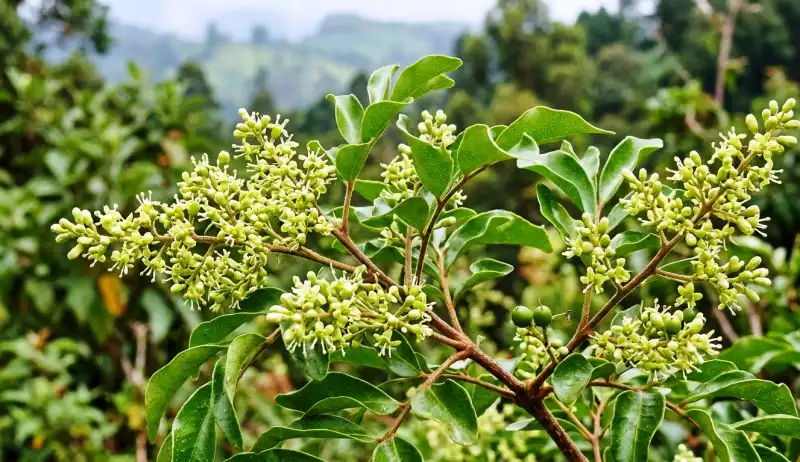
Botanical Profile: Clausena anisata
Clausena anisata, known locally as Mũtathi, provides the essential "grounding" effect necessary for high-quality sleep. In our comparative analysis, Clausena serves as more than a simple sedative; it acts as a neurological stabilizer.
Phytochemical Composition
The plant is exceptionally rich in bioactive compounds that address the psychological drivers of sleep deprivation:
Carbazole Alkaloids & Coumarins:
These primary constituents target mental restlessness and anxiety.
Anise-like Essential Oils:
The aromatic profile plays a critical role in sensory relaxation, serving as a vital precursor to the onset of the sleep cycle.
Synergy and Formulation Strategies
The synergistic relationship between Mũtathi and Mũnyũnyi (Leonotis leonurus) is a primary focus of our current formulation strategies. While Leonotis facilitates the physical transition into sleep, Clausena provides the stability required to maintain it.
| Botanical | Primary Role | Target Component |
|---|---|---|
| Mũnyũnyi | Sedative Inducer | Physical relaxation & sleep onset |
| Mũtathi | Neurological Stabilizer | Anxiety reduction & sleep maintenance |
When combined, these two botanicals help bridge the gap between falling asleep and staying asleep, creating a holistic approach to treating chronic insomnia.
Ocimum sanctum (Holy Basil/Tulsi): The Cortisol Regulator
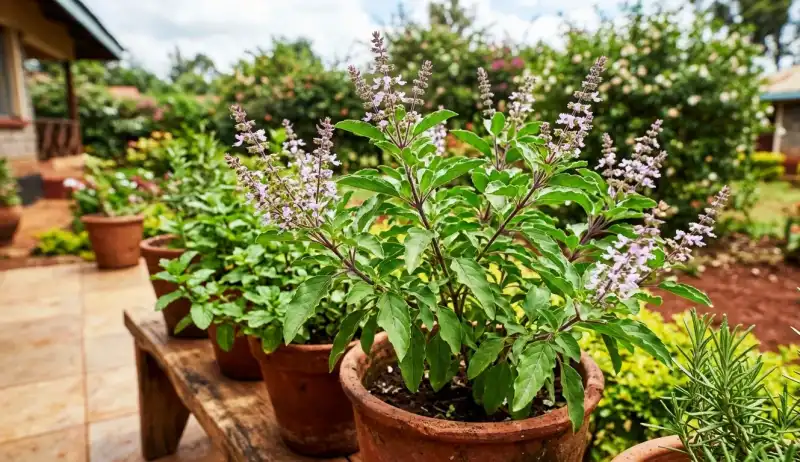
Adaptogenic Integration: Holy Basil (Ocimum sanctum)
Adding Holy Basil (Ocimum sanctum) to our research portfolio introduces the critical element of adaptogenic support. While Leonotis and Clausena
focus on the immediate induction of sleep, Holy Basil addresses the underlying hormonal imbalances--specifically cortisol --that often prevent the body from entering a restful state.
Hormonal Modulation and Stress Response
As an adaptogen, Holy Basil works by modulating the body's response to stress. Its inclusion acts as a "metabolic safety net," ensuring that the physiological stress accumulated throughout the day does not override the sedative signals provided by the other herbs. Its primary roles include:
Lowering Arousal Baselines:
Reducing the state of "high alert" in the nervous system.
Enhancing Receptivity:
Making the body more responsive to the deeper sedative effects of the Mũnyũnyi Mũtathi complex.
Extraction Efficiency
In a fermented decoction, volatile oils such as eugenol are more effectively preserved compared to high-heat boiling. By avoiding the degradation associated with thermal extraction, the fermentation process maintains the integrity of these aromatic compounds, allowing them to effectively target the hormonal drivers of insomnia.
Adaptogenic Integration: Holy Basil (Ocimum sanctum)
Adding Holy Basil (Ocimum sanctum) to our research portfolio introduces the critical element of adaptogenic support. While Leonotis and Clausena focus on the immediate induction of sleep, Holy Basil addresses the underlying hormonal imbalances--specifically cortisol--that often prevent the body from entering a restful state.
Hormonal Modulation and Stress Response
As an adaptogen, Holy Basil works by modulating the body's response to stress. Its inclusion acts as a "metabolic safety net," ensuring that the physiological stress accumulated throughout the day does not override the sedative signals provided by the other herbs. Its primary roles include:
Lowering Arousal Baselines: Reducing the state of "high alert" in the nervous system.
Enhancing Receptivity: Making the body more responsive to the deeper sedative effects of the Mũnyũnyi-Mũtathi complex.
Extraction Efficiency
In a fermented decoction, volatile oils such as eugenol are more effectively preserved compared to high-heat boiling. By avoiding the degradation associated with thermal extraction, the fermentation process maintains the integrity of these aromatic compounds, allowing them to effectively target the hormonal drivers of insomnia.
Sonchus oleraceus (Gagatang'i): The Essential Nutrient Buffer

Metabolic Support: Sonchus oleraceus (Gagatang'i)
Sonchus oleraceus, often dismissed as a common weed, is in fact a nutritional powerhouse that serves as the "metabolic engine" for our fermentation process. It provides essential minerals--specifically potassium, calcium, and magnesium --that are fundamental for maintaining yeast health and ensuring a vigorous fermentation cycle.
Mineral Synergy in Sleep Hygiene
Beyond the fermentation vessel, these minerals are crucial for human sleep hygiene. Magnesium, in particular, is a well-known cofactor for GABA receptors, which are the primary inhibitory neurotransmitters in the brain responsible for reducing neuronal excitability.
Physical Relaxation and Nerve Conduction
By including Gagatang'i, we ensure that the fermented tonic is not merely an alkaloid extract, but a mineral-rich electrolyte solution. This formulation supports:
Muscle Relaxation:
Helping to alleviate the physical tension that interferes with falling asleep.
Nerve Conduction:
Supporting stable signaling across the nervous system.
Cramp Prevention:
Mitigating leg cramps and involuntary movements that often disrupt sleep in its early stages.
Integrating this "weed" transforms the tonic into a holistic recovery aid, addressing the physical requirements of rest alongside the neurological ones.
Metabolic Support: Sonchus oleraceus (Gagatang'i)
Sonchus oleraceus, often dismissed as a common weed, is in fact a nutritional powerhouse that serves as the "metabolic engine" for our fermentation process. It provides essential minerals--specifically potassium, calcium, and magnesium--that are fundamental for maintaining yeast health and ensuring a vigorous fermentation cycle.
Mineral Synergy in Sleep Hygiene
Beyond the fermentation vessel, these minerals are crucial for human sleep hygiene. Magnesium, in particular, is a well-known cofactor for GABA receptors, which are the primary inhibitory neurotransmitters in the brain responsible for reducing neuronal excitability.
Physical Relaxation and Nerve Conduction
By including Gagatang'i, we ensure that the fermented tonic is not merely an alkaloid extract, but a mineral-rich electrolyte solution. This formulation supports:
Muscle Relaxation: Helping to alleviate the physical tension that interferes with falling asleep.
Nerve Conduction: Supporting stable signaling across the nervous system.
Cramp Prevention: Mitigating leg cramps and involuntary movements that often disrupt sleep in its early stages.
Integrating this "weed" transforms the tonic into a holistic recovery aid, addressing the physical requirements of rest alongside the neurological ones.
The Role of Saccharomyces cerevisiae: Fermentation as a Biological Solvent
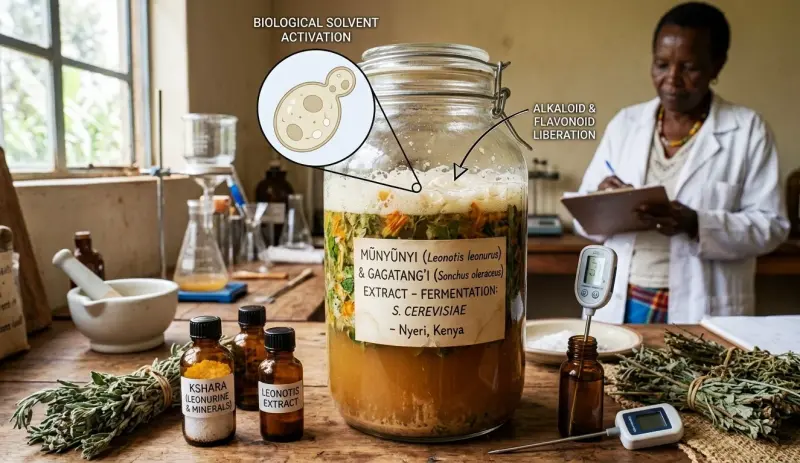
Biochemical Catalyst:
Saccharomyces cerevisiae
The introduction of baker's yeast (Saccharomyces cerevisiae) into the herbal decoction marks the shift from traditional tea-making to biochemical engineering. The fermentation process essentially "pre-digests" the medicine, breaking down the plant's cellular structures to make active compounds like Leonurine immediately available to the bloodstream.
Primary Functions of Yeast
In this research, yeast serves three critical technical roles:
Enzymatic Degradation:
It produces enzymes that break down the plant's rigid cellulose walls, releasing trapped phytonutrients.
Bio-Solvent Production:
It generates ethanol, which acts as a superior solvent for extracting non-polar alkaloids that water alone cannot reach.
Probiotic Synthesis:
It creates a probiotic environment that facilitates communication along the gut-brain axis.
Managing "Metabolic Noise"
Our findings regarding "restless sleep" after consuming a fermented cup highlight the extreme potency of this method. While the bioavailability is significantly increased, the presence of active yeast in the gut can lead to what we term"metabolic noise" --internal biological activity that may conflict with deep rest.
To refine the therapeutic outcome, we are currently moving beyond raw decoctions and focusing on refined filtration and crystallization techniques . This ensures that the final product retains the potentized alkaloids while removing the active biological agents that cause digestive or metabolic interference during the sleep cycle.
Biochemical Catalyst: Saccharomyces cerevisiae
The introduction of baker's yeast (Saccharomyces cerevisiae) into the herbal decoction marks the shift from traditional tea-making to biochemical engineering. The fermentation process essentially "pre-digests" the medicine, breaking down the plant's cellular structures to make active compounds like Leonurine immediately available to the bloodstream.
Primary Functions of Yeast
In this research, yeast serves three critical technical roles:
Enzymatic Degradation: It produces enzymes that break down the plant's rigid cellulose walls, releasing trapped phytonutrients.
Bio-Solvent Production: It generates ethanol, which acts as a superior solvent for extracting non-polar alkaloids that water alone cannot reach.
Probiotic Synthesis: It creates a probiotic environment that facilitates communication along the gut-brain axis.
Managing "Metabolic Noise"
Our findings regarding "restless sleep" after consuming a fermented cup highlight the extreme potency of this method. While the bioavailability is significantly increased, the presence of active yeast in the gut can lead to what we term "metabolic noise"--internal biological activity that may conflict with deep rest.
To refine the therapeutic outcome, we are currently moving beyond raw decoctions and focusing on refined filtration and crystallization techniques. This ensures that the final product retains the potentized alkaloids while removing the active biological agents that cause digestive or metabolic interference during the sleep cycle.
Advanced Refinement: The Path to Herbal Salt Crystallization
Advanced Synthesis: Herbal Salts (Kshara)
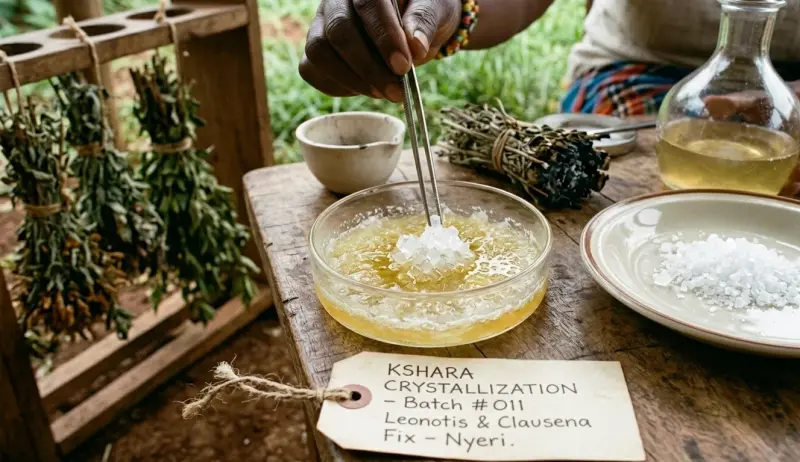
To solve the problem of disturbed sleep, our research has progressed toward the production of Herbal Salts (Kshara). This method represents the pinnacle of our current ethnobotanical strategy, transforming wild regional flora into a sophisticated pharmacological tool.
The Calcination Process
The production involves the precise calcination of the herbs--burning them to a white ash to isolate the "fixed salts" or essential minerals. By dissolving this ash and combining it with the fermented liquid extract, we can induce a state of crystallizationthrough slow evaporation.
Benefits of Crystallization
The resulting crystals are a concentrated, stable, and highly pure form of the herbal medicine. This refined state offers several critical advantages over raw liquid extracts:
Purity:
They lack the metabolic irritants and "noise" found in raw ferments.
Potency:
They retain the enhanced bioavailability of the alkaloids produced during fermentation.
Precision:
Crystallization allows for exact dosing, ensuring the researcher can identify the specific "sweet spot" for sedation without triggering a restless physiological response.
By marrying ancient mineral isolation techniques with modern fermentation, we have created a delivery system that provides consistent, deep sedation while maintaining the chemical integrity of the source plants.
Advanced Synthesis: Herbal Salts (Kshara)
To solve the problem of disturbed sleep, our research has progressed toward the production of Herbal Salts (Kshara). This method represents the pinnacle of our current ethnobotanical strategy, transforming wild regional flora into a sophisticated pharmacological tool.
The Calcination Process
The production involves the precise calcination of the herbs--burning them to a white ash to isolate the "fixed salts" or essential minerals. By dissolving this ash and combining it with the fermented liquid extract, we can induce a state of crystallization through slow evaporation.
Benefits of Crystallization
The resulting crystals are a concentrated, stable, and highly pure form of the herbal medicine. This refined state offers several critical advantages over raw liquid extracts:
Purity: They lack the metabolic irritants and "noise" found in raw ferments.
Potency: They retain the enhanced bioavailability of the alkaloids produced during fermentation.
Precision: Crystallization allows for exact dosing, ensuring the researcher can identify the specific "sweet spot" for sedation without triggering a restless physiological response.
By marrying ancient mineral isolation techniques with modern fermentation, we have created a delivery system that provides consistent, deep sedation while maintaining the chemical integrity of the source plants.
Executive Summary: Ethnobotanical Optimization for Sleep Science
This research explores a sophisticated intersection of ethnobotany, biochemical engineering, and traditional alchemy to address chronic insomnia. By shifting away from simple aqueous decoctions (teas), the study focuses on enhancing the bioavailability of regional flora through fermentation and mineral isolation.
Core Botanical Synergy
The formulation relies on a strategic combination of four key plants, each addressing a specific physiological or psychological barrier to rest:
Leonotis leonurus (Mũnyũnyi):
The primary sedative agent. Its active alkaloid, Leonurine, serves as a physical relaxant, though it requires specialized extraction to overcome its natural hydrophobicity.
Clausena anisata (Mũtathi):
Acts as a neurological stabilizer. It targets anxiety and mental restlessness, bridging the gap between falling asleep and staying asleep.
Holy Basil (Ocimum sanctum):
An adaptogen that manages the "metabolic safety net" by modulating cortisol levels and reducing the day's accumulated stress response.
Sonchus oleraceus (Gagatang'i):
The metabolic engine. It provides essential minerals like magnesium and potassium, which facilitate the fermentation process and prevent physical disruptions like leg cramps.
The Fermentation & Crystallization Breakthrough
The research identifies the "Boiling Paradox," where high heat destroys delicate alkaloids and fails to extract resins. To solve this, the protocol employs:
Saccharomyces cerevisiae (Yeast):
Used to "pre-digest" plant material, using enzymatic breakdown and ethanol production to create a highly potent liquid extract.
Calcination (Kshara):
Herbs are reduced to white ash to isolate "fixed salts."
Crystallization:
By combining the fermented extract with the isolated mineral salts and allowing slow evaporation, the medicine is transformed into Herbal Salts.
The final result is a concentrated, stable, and highly pure crystalline form of the medicine. This advanced delivery system eliminates the "metabolic noise" of raw ferments while allowing for precise pharmacological dosing, transforming wild African flora into a sophisticated tool for sleep optimization.
Executive Summary: Ethnobotanical Optimization for Sleep Science
This research explores a sophisticated intersection of ethnobotany, biochemical engineering, and traditional alchemy to address chronic insomnia. By shifting away from simple aqueous decoctions (teas), the study focuses on enhancing the bioavailability of regional flora through fermentation and mineral isolation.
Core Botanical Synergy
The formulation relies on a strategic combination of four key plants, each addressing a specific physiological or psychological barrier to rest:
Leonotis leonurus (Mũnyũnyi): The primary sedative agent. Its active alkaloid, Leonurine, serves as a physical relaxant, though it requires specialized extraction to overcome its natural hydrophobicity.
Clausena anisata (Mũtathi): Acts as a neurological stabilizer. It targets anxiety and mental restlessness, bridging the gap between falling asleep and staying asleep.
Holy Basil (Ocimum sanctum): An adaptogen that manages the "metabolic safety net" by modulating cortisol levels and reducing the day's accumulated stress response.
Sonchus oleraceus (Gagatang'i): The metabolic engine. It provides essential minerals like magnesium and potassium, which facilitate the fermentation process and prevent physical disruptions like leg cramps.
The Fermentation & Crystallization Breakthrough
The research identifies the "Boiling Paradox," where high heat destroys delicate alkaloids and fails to extract resins. To solve this, the protocol employs:
Saccharomyces cerevisiae (Yeast): Used to "pre-digest" plant material, using enzymatic breakdown and ethanol production to create a highly potent liquid extract.
Calcination (Kshara): Herbs are reduced to white ash to isolate "fixed salts."
Crystallization: By combining the fermented extract with the isolated mineral salts and allowing slow evaporation, the medicine is transformed into Herbal Salts.

Conclusion
The final result is a concentrated, stable, and highly pure crystalline form of the medicine. This advanced delivery system eliminates the "metabolic noise" of raw ferments while allowing for precise pharmacological dosing, transforming wild African flora into a sophisticated tool for sleep optimization.




Recommended Affiliate Resources







You May Also Like

The Science and Practice of Fermented Herbal Sleep Remedies
Sleep disruption has quietly become one of the most persistent challenges of modern life. Many people are not…
Read More »
The Allure of Natural Nervines and Oxalis Latifolia
In a world increasingly dominated by synthetic sleep aids and pharmaceutical interventions, there is a…
Read More »
Top Herbs for Long-Term Memory Support for Adults
In a world where mental fog and forgetfulness are becoming the norm, discovering natural ways to support…
Read More »
Valerian vs Winter Cherry
Insomnia affects millions worldwide , leading many to seek natural remedies for a restful night's sleep.…
Read More »
Chronic Insomnia Causes & Affected Organs Explained
Sleep is essential -- fundamental to mental clarity, emotional balance, and physical rejuvenation. Yet…
Read More »
🌿 Can Herbs Cure Cancer? A Historical Exploration of Healing Plants
For centuries, plants and herbs have held a sacred place in human culture. From spiritual rituals to daily…
Read More »Traffic Coop Earnings
Ready to Monetise Your Traffic?
Stop letting your visitors slip away without value. With the LeadsLeap Co-op, you can turn every click into income. Join through my link below and I’ll personally share my tips for getting started fast.
Join My LeadsLeap Co-op Now
About the Author
Hello, I'm Patrick Wilson — an entrepreneur, artist, and storyteller driven by curiosity and passion. Through this blog, I explore and share meaningful content around a wide spectrum of lifestyle and success topics that matter to everyday people looking to live better, earn more, and grow intentionally.
From building a personal brand and making money online through proven digital strategies, to navigating the journey of personal finance and wealth-building — I bring real-world insights and tools to help you take control of your financial future.
I also document my pursuit of a healthy, balanced life — sharing inspiration around achieving fitness goals and living with purpose. As someone who appreciates both the aesthetic and the soulful, I dive deep into fine art, cultural history, and the enriching nuances of everyday lifestyle.
Whether I'm exploring breathtaking travel destinations across the globe or tending to the joys of home and garden, I aim to bring beauty, clarity, and useful ideas to every post.
If you're passionate about growth — financially, creatively, or personally — this blog is designed to inspire and support your journey.
Thanks for being here — let's grow together.