
Why Single Redirect Hop Websites Tend to Rank Better.
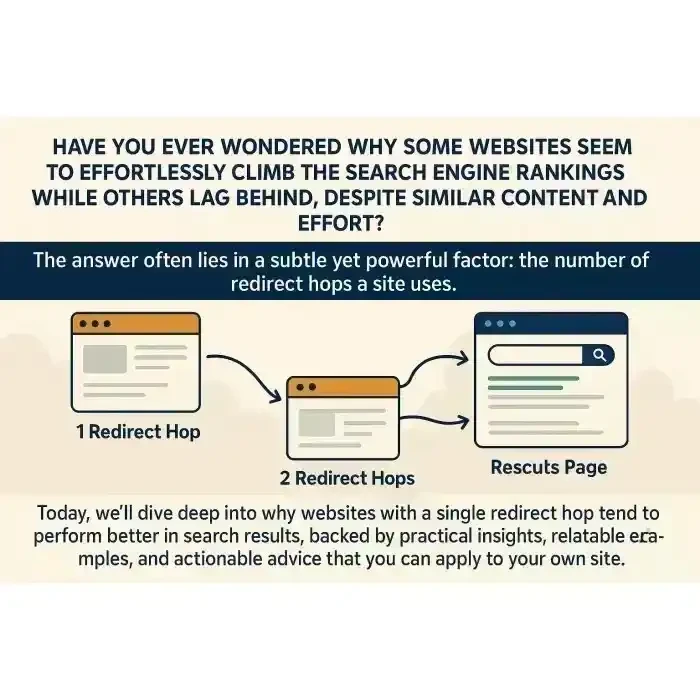
Have you ever wondered why some websites seem to effortlessly climb the search engine rankings while others lag behind, despite similar content and effort? The answer often lies in a subtle yet powerful factor: the number of redirect hops a site uses. Today, we'll dive deep into why websites with a single redirect hop tend to perform better in search results, backed by practical insights, relatable examples, and actionable advice that you can apply to your own site.
The Hidden Power of a Single Redirect Hop
Imagine walking through a crowded street filled with multiple detours, dead-ends, and confusing signs. Your goal is to reach a coffee shop just a few blocks away. You could get there, but the journey will be slow, frustrating, and stressful. This is exactly what happens when search engines crawl a website with multiple redirect hops. Each extra hop is a potential point of friction, slowing down the path to the final page and diluting ranking signals.
In contrast, a single redirect hop acts like a clear, well-marked shortcut. It leads both users and search engine bots directly to the intended page, preserving link equity and improving overall crawl efficiency. This simple adjustment can make a significant difference in rankings, especially for sites competing in competitive niches.
How Redirect Hops Affect SEO
- Page Authority Dilution: Each redirect hop can reduce the amount of link equity passed to the final page, weakening its ranking potential.
- Slower Crawl Speed: Search engine bots have crawl budgets for each site. Multiple hops waste this budget, limiting the number of pages indexed.
- User Experience Impact: Redirect chains can slow down page load times, increasing bounce rates and sending negative signals to search engines.
Think of your website as a network of roads. The smoother the route, the faster and more efficiently traffic (both human and bot) can reach its destination.
Common Scenarios Leading to Multiple Redirect Hops
Many website owners unknowingly create multiple redirect hops. Here are a few examples:
- HTTP to HTTPS to WWW: Redirecting from http://example.com to https://example.com and then to https://www.example.com creates two hops instead of one.
- Old URL Structures: Migrating from old URLs to new ones without consolidating redirects can create long chains.
- Affiliate or Tracking URLs: Adding multiple tracking or affiliate redirects can complicate paths.
Even a small number of unnecessary hops can cumulatively affect a site's performance over time.
The SEO Benefits of a Single Redirect Hop
Let's break down why one redirect hop is optimal:
1. Preserves Link Equity
Every backlink to your site carries authority, and each redirect hop diminishes this authority. A single redirect ensures that nearly all the link juice reaches the final destination, maximising its ranking potential.
2. Improves Crawl Efficiency
Search engines allocate a crawl budget to your site. With multiple hops, bots spend more time navigating redirects instead of indexing your content. A single hop ensures that more pages are indexed faster and more accurately.
3. Enhances User Experience
Users expect instant access. Long redirect chains can delay page loading, causing frustration and higher bounce rates. A single redirect hop reduces waiting time, keeping visitors engaged and signalling to search engines that your site is user-friendly.
4. Reduces Technical Errors
Complex redirect chains increase the risk of errors such as redirect loops or broken links. Maintaining a single redirect hop simplifies your site's architecture, reducing the likelihood of SEO-damaging technical issues.
Practical Examples: Single vs. Multiple Hops
Consider two websites migrating from HTTP to HTTPS:
- Site A: Redirects http://example.com → https://example.com → https://www.example.com (two hops)
- Site B: Redirects http://example.com → https://www.example.com (single hop)
Over time, Site B consistently ranks higher because it passes more link equity, reduces crawl time, and improves user experience. Site A may still rank, but it's fighting an uphill battle against unnecessary friction.
Implementing Single Redirect Hops: A Step-By-Step Guide
Here's how you can optimise your site with single redirect hops:
- Audit Existing Redirects: Use tools like Screaming Frog or Ahrefs to identify multiple redirect chains.
- Consolidate Redirects: Combine multiple hops into a single 301 redirect directly pointing to the final URL.
- Update Internal Links: Ensure all internal links point directly to the final destination, bypassing unnecessary redirects.
- Fix External Links: If possible, ask referring sites to update their links to point directly to your final URLs.
- Monitor Performance: Use Google Search Console to track crawl stats and identify any remaining redirect issues.
Expert Insights: Why SEO Professionals Prioritise Single Redirect Hops
SEO experts consistently emphasise the importance of redirect efficiency. John Mueller from Google has repeatedly stated that while Google can follow multiple redirects, every extra hop introduces potential complications. Less complexity means faster indexing, better link equity distribution, and fewer errors--all of which translate into higher rankings.
From my own experience managing websites, I've seen sites jump from page five to page one after consolidating multiple redirects into a single hop. The impact isn't just technical; it's psychological too. Fewer redirects mean faster load times, happier visitors, and improved trust signals--all indirectly influencing rankings.
Practical Metaphor: The Domino Effect
Think of each redirect as a domino. One domino is easy to tip, but a long chain of dominos increases the chance of misalignment or falling in the wrong direction. Similarly, each additional redirect hop can slightly weaken the intended SEO signal, and over time, the effect compounds. A single redirect hop keeps your SEO dominos perfectly aligned.
Additional Tips to Maximise Ranking Potential
- Use 301 Redirects Instead of 302: 301 signals permanent change and passes link equity, whereas 302 is temporary and can dilute authority.
- Keep URL Structures Clean: Avoid unnecessary subfolders and parameters that require additional redirects.
- Leverage Canonical Tags: In addition to redirects, canonical tags help signal the preferred URL to search engines.
- Monitor Mobile Performance: Redirect chains can affect mobile speed, which is critical for SEO.
- Regularly Audit Redirects: Redirects are not "set and forget." Regular audits ensure your site remains efficient.
Real-Life Story: How One Blog Gained Rankings with Single Redirects
A friend of mine runs a niche blogging site. When she first launched, her URLs were messy due to a series of migrations. Some pages had two or three redirect hops. Despite producing high-quality content, her rankings stagnated. After conducting a redirect audit, she consolidated all URLs to a single hop. Within six weeks, her organic traffic increased by 35%, and several posts reached the first page of Google for competitive keywords. The lesson? Sometimes, small technical adjustments have a massive impact.

Key Takeaways
Let's summarise the main points:
- Every redirect hop can dilute link equity and slow down crawl efficiency.
- Single redirect hops improve user experience, reduce technical errors, and maximise SEO potential.
- Regular audits, consolidation, and updating internal links are essential for maintaining single-hop efficiency.
- Even small changes in redirect strategy can have significant effects on search engine rankings.
Conclusion
In the world of SEO, details matter. While content quality, backlinks, and user experience are crucial, the technical backbone of your site often determines how well these factors are rewarded. Websites with a single redirect hop offer clarity, efficiency, and strength--helping both users and search engines navigate your site effortlessly. By auditing your redirects, consolidating chains, and maintaining clean URL structures, you can create a site that's not just user-friendly but also ranking-ready.

Remember, SEO is like tending a garden. You can plant the best seeds, but if the paths are cluttered and inefficient, the growth will be limited. Simplifying redirects is like clearing the pathways, allowing your site to flourish fully.


Recommended Affiliate Resources







You May Also Like

Free Programming Tools for Beginners on Windows
If you're a beginner wanting to dive into programming on Windows but feel overwhelmed by choices, you're in…
Read More »
How Uncontrolled PHP Crawling Can Harm Your Site
Many websites experience sudden crawl drops, pages falling out of the index, sluggish indexing of new…
Read More »
How Your Relevant Insights Can Earn a Valuable Backlink
In today's digital ecosystem, engaging with content through blog comments has evolved from a casual activity…
Read More »
Easy SEO Link Building
In this article; we are going to discuss on an easy SEO link building strategy using this free WordPress…
Read More »
Domain Authority (DA) vs Domain Rating (DR) what's the difference?
DA might be more useful for assessing the overall SEO health of a site, including technical SEO, content…
Read More »
Table of Contents and Their Impact on Your Blog
In the digital age, mastering the art of SEO ( search engine optimization) is essential for any online…
Read More »Traffic Coop Earnings
Ready to Monetise Your Traffic?
Stop letting your visitors slip away without value. With the LeadsLeap Co-op, you can turn every click into income. Join through my link below and I’ll personally share my tips for getting started fast.
Join My LeadsLeap Co-op Now
About the Author
Hello, I'm Patrick Wilson — an entrepreneur, artist, and storyteller driven by curiosity and passion. Through this blog, I explore and share meaningful content around a wide spectrum of lifestyle and success topics that matter to everyday people looking to live better, earn more, and grow intentionally.
From building a personal brand and making money online through proven digital strategies, to navigating the journey of personal finance and wealth-building — I bring real-world insights and tools to help you take control of your financial future.
I also document my pursuit of a healthy, balanced life — sharing inspiration around achieving fitness goals and living with purpose. As someone who appreciates both the aesthetic and the soulful, I dive deep into fine art, cultural history, and the enriching nuances of everyday lifestyle.
Whether I'm exploring breathtaking travel destinations across the globe or tending to the joys of home and garden, I aim to bring beauty, clarity, and useful ideas to every post.
If you're passionate about growth — financially, creatively, or personally — this blog is designed to inspire and support your journey.
Thanks for being here — let's grow together.