
How Uncontrolled PHP Crawling Can Harm Your Site

Many websites experience sudden crawl drops, pages falling out of the index, sluggish indexing of new content, and long-term stagnation in search rankings without any obvious penalty or manual action. These issues often appear slowly, then compound, leaving site owners confused as to what went wrong.
In most cases, the root cause is not a single algorithm update or content problem. It is almost always technical: uncontrolled crawling, duplicate entry points, unnecessary file exposure, and inefficient use of crawl budget. When search engines are allowed to crawl everything instead of what matters, visibility quietly collapses.
This article explains how crawl mismanagement leads to indexing failure, why allowing unnecessary files and folders is harmful, how duplicate hosts and subdomains multiply damage, and how to regain stability through clean crawl control.
Understanding Crawl Budget and Why It Matters
Search engines do not crawl websites endlessly. Every site is assigned a crawl budget, which is the number of URLs a crawler is willing to fetch within a given time period. This budget is influenced by site authority, server health, and overall crawl efficiency.
When crawl budget is used efficiently, search engines prioritise:
- Canonical content pages
- Internal links between articles
- Updated or newly published content
When crawl budget is wasted, crawlers spend time on:
- Helper scripts and backend files
- Duplicate URLs and alternate entry points
- Logs, debug files, and temporary assets
Once budget is consumed by low-value URLs, important pages are delayed, ignored, or dropped from the index.
Why Crawling Unnecessary Files Is Harmful
Modern websites are rarely static. They rely on routing systems, frameworks, and backend scripts that generate pages dynamically. These scripts are not content; they are infrastructure. When crawlers are allowed to access them directly, several problems emerge.
1. Crawl Budget Drain
Every unnecessary file requested by a crawler consumes budget. When hundreds or thousands of internal scripts, logs, or fragments are crawlable, they compete directly with real pages.
Over time, search engines begin to prioritise fewer URLs, causing crawl frequency to drop site-wide.
2. Index Pollution
Helper files rarely contain meaningful content. If indexed, they are classified as thin or low-quality pages. A large volume of thin URLs weakens overall site quality signals.
This often results in a high number of URLs labelled as "crawled but not indexed", which is a symptom of crawl inefficiency rather than content failure.
3. Duplicate Content Signals
When the same content is accessible through multiple technical routes, search engines detect duplication. This may not trigger a penalty, but it forces algorithms to choose one version arbitrarily, leaving others excluded.
As duplication increases, indexing slows and ranking stability declines.
4. Reduced Trust in Sitemaps
Sitemaps are advisory, not mandatory. If crawlers repeatedly encounter irrelevant URLs outside sitemaps, they may deprioritise sitemap submissions entirely.
This leads to situations where valid sitemaps are submitted, accepted, yet ignored for crawling.
Why File Extensions Should Rarely Be Crawled
In most modern setups, visible URLs do not map directly to physical files. Routing systems rewrite requests internally, serving content without exposing implementation details.
Allowing direct crawling of file extensions introduces unnecessary risk:
- Backend scripts appear as standalone URLs
- Indexable technical endpoints multiply
- Duplicate access paths emerge
Blocking file extensions such as PHP or TXT does not affect indexing of routed pages. Search engines index the URL shown to users, not the script executing behind the scenes.
When clean URLs remain accessible, blocking extensions improves crawl efficiency rather than harming visibility.
The Hidden Damage of Duplicate Hosts and Subdomains
One of the most overlooked causes of indexing collapse is duplicate hosts. Search engines treat every host as a separate site:
- www.example.com
- example.com
- mail.example.com
- cdn.example.com
If two hosts serve similar or identical content, duplication multiplies instantly.
Why This Is Dangerous
- Crawl budget is split across hosts
- Duplicate pages compete with each other
- Canonical signals weaken
- Indexing decisions become inconsistent
Even if one host is not intentionally public, misconfiguration can expose it to crawlers. Once discovered, it may be indexed without warning.
How Duplicate Hosts Cause Ranking Drops
When search engines detect the same content across multiple hosts, they attempt to consolidate signals. This consolidation is not always clean.
Common outcomes include:
- Main pages being deindexed temporarily
- Alternate hosts ranking instead of the preferred one
- Internal links losing authority flow
- Overall ranking stagnation
These effects are algorithmic, gradual, and often misdiagnosed as content issues.
Why Robots.txt Misuse Makes Problems Worse
Robots.txt is powerful but unforgiving. Poorly structured rules can accidentally block important resources or create conflicts that crawlers interpret unpredictably.
Common mistakes include:
- Blocking parent directories while allowing child assets
- Redundant or contradictory rules
- Excessively long files with overlapping patterns
When crawlers encounter conflicting instructions, they default to caution, often reducing crawl frequency.
Why Overexposure Is Worse Than Overblocking
Blocking too much content can prevent indexing. However, exposing too much causes deeper systemic damage.
Overexposure leads to:
- Crawl budget dilution
- Quality signal dilution
- Duplicate discovery
- Sitemap devaluation
In contrast, precise blocking of non-content assets improves clarity. Search engines prefer fewer, cleaner URLs over expansive, uncontrolled surfaces.
Sitemap Exclusion Is a Symptom, Not the Disease
When sitemaps appear ignored or URLs are excluded despite submission, the issue is rarely the sitemap itself.
The real causes usually include:
- High volume of irrelevant crawlable URLs
- Duplicate content across multiple paths
- Inconsistent canonical signals
- Server inefficiencies
Search engines use sitemaps as guidance. If reality contradicts the sitemap, reality wins.
Why Crawled but Not Indexed Persists
"Crawled but not indexed" is often misunderstood. It does not mean pages are low quality. It means they were evaluated and deprioritised.
Frequent causes include:
- Duplication across hosts or paths
- Thin or boilerplate content discovered elsewhere
- Crawl budget exhaustion
- Conflicting signals
Until crawl efficiency improves, these pages remain in limbo.
How Long Recovery Takes After Fixes
Recovery from crawl and indexing issues is not instant. Search engines must:
- Re-crawl affected URLs
- Re-evaluate canonical relationships
- Update index priorities
Typical timelines:
- Crawl behaviour improvement: 2-4 weeks
- Index stability: 4-8 weeks
- Ranking normalisation: 6-12 weeks
Sites with long-standing issues may take longer, but recovery is achievable when crawl surfaces are cleaned.
Best Practices for Sustainable Crawl Control
- Expose only user-facing URLs
- Block backend scripts and logs
- Consolidate hosts and subdomains
- Use canonical URLs consistently
- Keep robots.txt minimal and precise
Crawl efficiency is not about hiding content. It is about clarity.

Conclusion: Technical Discipline Restores Visibility
Crawl drops, deindexation, sluggish indexing, and stagnant rankings rarely happen without cause. In most cases, they are the result of technical sprawl: too many crawlable URLs, too many duplicate entry points, and too little control.
Search engines reward sites that present content cleanly and consistently. When infrastructure is invisible and content is clear, crawling becomes efficient, indexing stabilises, and rankings recover naturally.

The solution is not more content or aggressive optimisation. It is discipline: controlling what search engines see, and letting them focus on what matters.



Recommended Affiliate Resources







You May Also Like

Free Programming Tools for Beginners on Windows
If you're a beginner wanting to dive into programming on Windows but feel overwhelmed by choices, you're in…
Read More »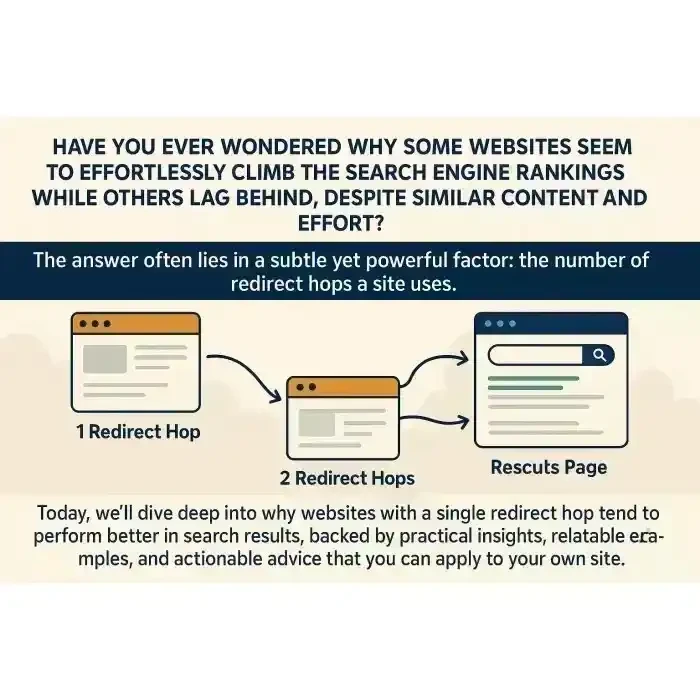
Why Single Redirect Hop Websites Tend to Rank Better.
Have you ever wondered why some websites seem to effortlessly climb the search engine rankings while others…
Read More »
How Your Relevant Insights Can Earn a Valuable Backlink
In today's digital ecosystem, engaging with content through blog comments has evolved from a casual activity…
Read More »
Easy SEO Link Building
In this article; we are going to discuss on an easy SEO link building strategy using this free WordPress…
Read More »
Domain Authority (DA) vs Domain Rating (DR) what's the difference?
DA might be more useful for assessing the overall SEO health of a site, including technical SEO, content…
Read More »
Table of Contents and Their Impact on Your Blog
In the digital age, mastering the art of SEO ( search engine optimization) is essential for any online…
Read More »Traffic Coop Earnings
Ready to Monetise Your Traffic?
Stop letting your visitors slip away without value. With the LeadsLeap Co-op, you can turn every click into income. Join through my link below and I’ll personally share my tips for getting started fast.
Join My LeadsLeap Co-op Now
About the Author
Hello, I'm Patrick Wilson — an entrepreneur, artist, and storyteller driven by curiosity and passion. Through this blog, I explore and share meaningful content around a wide spectrum of lifestyle and success topics that matter to everyday people looking to live better, earn more, and grow intentionally.
From building a personal brand and making money online through proven digital strategies, to navigating the journey of personal finance and wealth-building — I bring real-world insights and tools to help you take control of your financial future.
I also document my pursuit of a healthy, balanced life — sharing inspiration around achieving fitness goals and living with purpose. As someone who appreciates both the aesthetic and the soulful, I dive deep into fine art, cultural history, and the enriching nuances of everyday lifestyle.
Whether I'm exploring breathtaking travel destinations across the globe or tending to the joys of home and garden, I aim to bring beauty, clarity, and useful ideas to every post.
If you're passionate about growth — financially, creatively, or personally — this blog is designed to inspire and support your journey.
Thanks for being here — let's grow together.