How to Boost SEO with Screaming Frog Effectively
A Complete Technical SEO Guide
Search engine optimisation requires more than simply publishing content and building backlinks. Modern SEO demands a strong technical foundation that ensures search engines can efficiently crawl, understand, and index website pages. One of the most powerful tools used by SEO professionals to analyse and improve technical performance is Screaming Frog.
Screaming Frog is widely recognised as one of the most effective website crawling tools available to digital marketers, bloggers, developers, and SEO specialists. It works by scanning websites in a similar way to how search engine bots crawl the web. By analysing a site's structure, metadata, links, and technical signals, it reveals hidden issues that may prevent pages from ranking well in search results.
Understanding how to boost SEO with Screaming Frog effectively can dramatically improve a website's technical health, user experience, and overall search engine visibility. Many successful websites rely on regular technical audits using this tool to identify broken links, duplicate content, missing metadata, redirect chains, and other optimisation opportunities.
This comprehensive guide explains how Screaming Frog works, how to perform a detailed SEO audit, and the best strategies for using the tool to improve rankings, increase organic traffic, and strengthen long-term website performance.
Understanding What Screaming Frog Does for SEO
Screaming Frog is a website crawler that scans pages and collects detailed technical data. Instead of manually reviewing every page of a website, the tool automatically analyses thousands of URLs and organises the information into clear reports.
The crawler follows internal links in the same way search engines navigate websites. As it moves from page to page, it records important elements such as page titles, meta descriptions, headings, canonical tags, response codes, redirects, and image attributes.
This detailed data allows SEO professionals to identify technical problems that may prevent search engines from properly indexing pages. For example, if important pages return error codes or are blocked by incorrect directives, search engines may struggle to crawl them.
Using Screaming Frog regularly helps maintain a technically sound website structure. The insights gained from its reports allow website owners to fix problems early, preventing negative effects on rankings and search visibility.
Why Technical SEO Matters for Search Rankings
Technical SEO forms the foundation of successful search engine optimisation. Even the most informative content can struggle to rank if search engines cannot crawl or interpret the website correctly.
Search engines evaluate many technical signals when determining which pages to rank. These signals include page accessibility, loading speed, site structure, internal linking, and metadata optimisation. Screaming Frog helps identify weaknesses in each of these areas.
For example, if a website contains hundreds of broken internal links, search engines may interpret the site as poorly maintained. This can reduce trust and negatively affect rankings. By identifying and fixing these issues quickly, website owners can improve crawl efficiency and maintain stronger search performance.
Technical optimisation also improves user experience. Visitors are more likely to stay on websites that load quickly, display properly, and allow easy navigation between pages. Because search engines measure user engagement signals, these improvements indirectly strengthen SEO results.
Setting Up Screaming Frog for an Effective SEO Audit
Before beginning an SEO audit, it is important to configure Screaming Frog correctly. Proper configuration ensures the crawler collects accurate data and identifies the most important issues affecting search performance.
The first step involves entering the website's URL into the crawler and starting the scan. The tool will begin analysing pages and following internal links until the entire site structure has been mapped.
Large websites may contain thousands of pages, so the crawl process may take several minutes or longer depending on site size. During this process, Screaming Frog gathers detailed technical data for every discovered page.
After the crawl is completed, the results appear in organised tabs showing different categories of technical information. These tabs allow SEO professionals to quickly identify issues affecting titles, descriptions, headings, response codes, canonical tags, images, and links.
Connecting Screaming Frog with Analytics and Search Console
One of the most effective ways to boost SEO with Screaming Frog is by connecting the crawler with analytics platforms. Integrating Google Analytics and Google Search Console allows the tool to combine crawl data with real traffic and performance metrics.
When these integrations are enabled, Screaming Frog displays valuable insights such as organic traffic levels, impressions, click-through rates, and ranking data directly alongside technical crawl information.
This combined data makes it easier to prioritise optimisation tasks. Pages that receive significant traffic but contain technical issues should be addressed first because improvements may quickly increase performance.
For example, if a high-traffic page is missing a meta description or contains duplicate title tags, correcting these elements may improve click-through rates and search rankings.
Finding and Fixing Broken Links
Broken links are one of the most common technical issues affecting websites. These occur when a link points to a page that no longer exists or returns an error response. Broken links can negatively impact both user experience and search engine crawling efficiency.
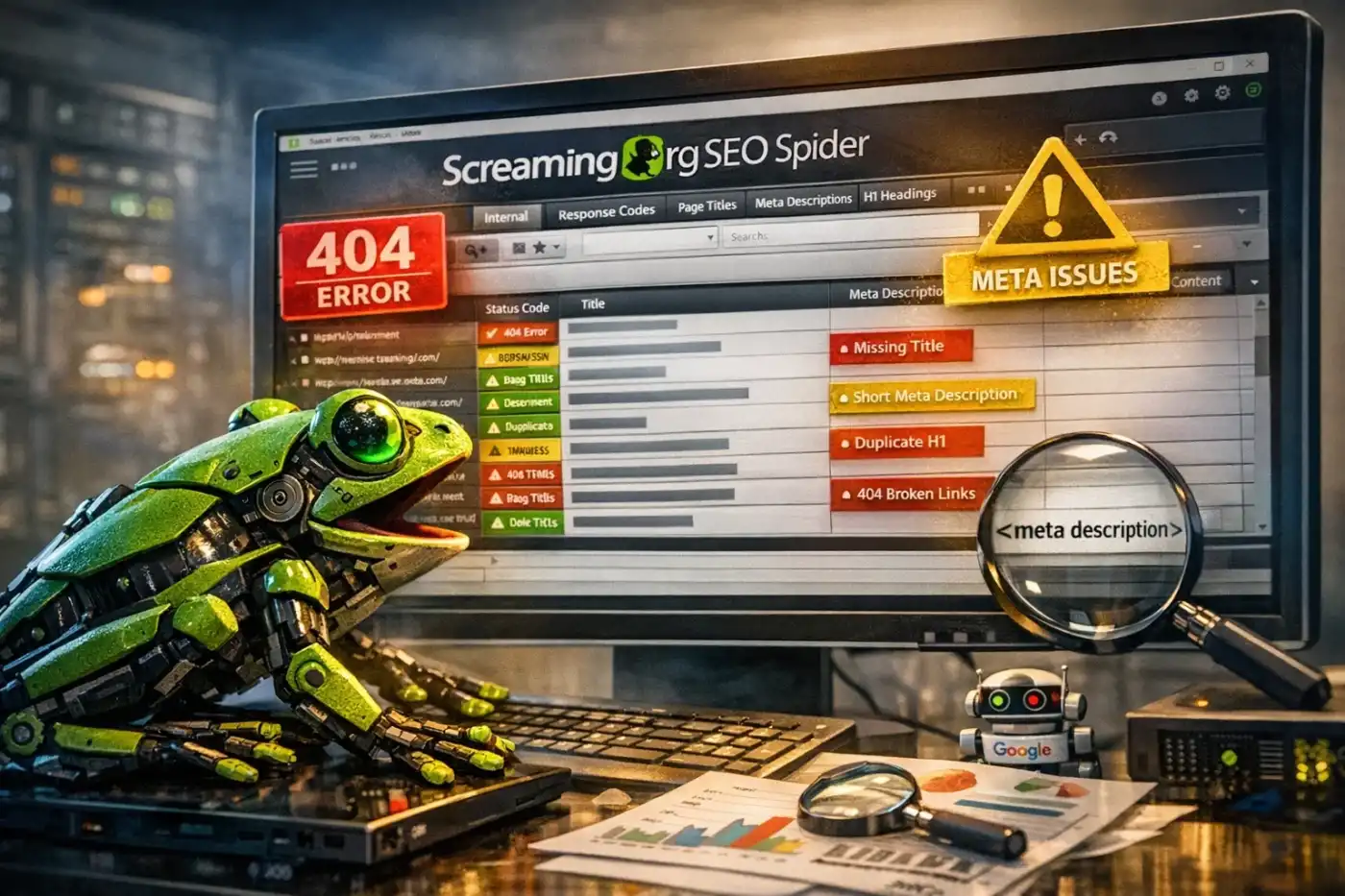
Screaming Frog identifies broken links by analysing response codes returned by each page. Pages that return 404 errors or other problematic responses appear clearly within the response code report.
Once broken links have been identified, website owners can fix them by updating the link destination, replacing the link with a relevant page, or implementing proper redirects.
Fixing broken links improves website navigation and ensures search engine crawlers can move smoothly through the site structure. This helps search engines discover and index pages more efficiently.
Managing Redirects and Redirect Chains
Redirects are often necessary when pages are moved or deleted. However, poorly configured redirects can create chains or loops that slow down crawling and reduce page performance.
Screaming Frog highlights redirect chains and redirect loops within its reports. A redirect chain occurs when one URL redirects to another, which then redirects again before reaching the final destination.
Search engines prefer direct redirects because they reduce unnecessary processing. Simplifying redirect chains improves crawl efficiency and preserves link equity.
Optimising Page Titles and Meta Descriptions
Page titles and meta descriptions play a crucial role in SEO and search visibility. These elements help search engines understand page content and influence how pages appear in search results.
Screaming Frog analyses every title tag and meta description across a website. It identifies issues such as missing tags, duplicate titles, overly long descriptions, and pages with poor optimisation.
Correcting these issues improves the clarity of page signals sent to search engines. Unique and descriptive titles help search engines determine page relevance for specific search queries.
Meta descriptions do not directly influence rankings but significantly affect click-through rates. Well-written descriptions encourage users to click on search results, increasing traffic and engagement.
Identifying Duplicate Content Issues
Duplicate content can confuse search engines and dilute ranking signals across multiple pages. When similar or identical content appears on several URLs, search engines may struggle to determine which version should rank.
Screaming Frog identifies duplicate titles, descriptions, and content patterns across websites. These insights allow website owners to consolidate duplicate pages or implement canonical tags that specify the preferred version.
Resolving duplicate content issues strengthens ranking signals and helps search engines focus on the most relevant pages.
Improving Website Structure and Internal Linking
A strong internal linking structure is essential for both user navigation and search engine crawling. Internal links guide visitors to related content while distributing ranking authority across pages.
Screaming Frog provides detailed reports on internal links, showing how pages connect throughout the website. These reports highlight orphan pages, which are pages that exist but are not linked from other pages.
Orphan pages are difficult for search engines to discover and index. Adding internal links from relevant content helps ensure these pages receive visibility and ranking potential.
Internal linking also helps establish topical relevance within a website. By linking related articles together, website owners create content clusters that demonstrate expertise in specific subject areas.
Analysing Crawl Depth and Site Architecture
Crawl depth refers to how many clicks it takes to reach a page from the homepage. Pages that require many clicks to access may receive less attention from search engine crawlers.
Screaming Frog displays crawl depth information that reveals how easily pages can be reached within the site structure. Important pages should ideally be accessible within a few clicks from the homepage.
Improving site architecture by reorganising navigation menus and adding strategic internal links ensures important pages receive adequate visibility.
Optimising Images for Better SEO Performance
Images contribute significantly to both website aesthetics and SEO performance. However, poorly optimised images can slow down page loading times and negatively affect user experience.
Screaming Frog analyses image attributes and identifies issues such as missing alt text or excessively large file sizes. Alt text helps search engines understand the content of images and improves accessibility for visually impaired users.
Adding descriptive alt text improves image search visibility and strengthens overall page relevance. Compressing large images reduces loading times and improves site speed, which is an important ranking factor.
Identifying Indexing and Crawlability Issues
Search engines must be able to crawl and index pages in order to display them in search results. Technical errors can sometimes prevent this process from occurring correctly.
Screaming Frog identifies pages blocked by robots.txt files, incorrect noindex directives, or misconfigured canonical tags. These issues can unintentionally prevent important pages from appearing in search results.
By reviewing crawl directives and indexing instructions, website owners can ensure search engines have proper access to valuable content.
Evaluating Canonical Tags
Canonical tags indicate the preferred version of a page when multiple similar URLs exist. Correct canonical implementation prevents duplicate content issues and consolidates ranking signals.
Screaming Frog displays canonical tag information for every page in the crawl. This allows SEO professionals to verify that canonical tags point to the correct URLs.
Incorrect canonical tags can cause search engines to ignore important pages, so verifying these signals is essential during technical audits.
Advanced Screaming Frog Strategies for SEO Growth
Once the basic features of Screaming Frog are understood, advanced strategies can unlock even greater SEO insights. Experienced SEO professionals often customise crawl settings, analyse structured data, and export detailed reports for deeper analysis.
Custom extraction features allow the crawler to capture specific elements from webpages, such as schema markup or particular HTML attributes. These advanced capabilities make Screaming Frog a versatile tool for in-depth technical audits.
Another powerful strategy involves scheduling regular crawls. Websites change frequently as new content is published or pages are updated. Scheduled crawls ensure technical issues are detected quickly.
Consistent monitoring allows website owners to maintain strong technical health and prevent problems from accumulating over time.
Common SEO Mistakes Screaming Frog Helps Identify
Many websites unknowingly contain technical errors that limit their search visibility. Screaming Frog helps uncover these hidden issues quickly and efficiently.
- Missing or duplicate title tags.
- Broken internal links and 404 pages.
- Incorrect redirects and redirect chains.
- Pages blocked by robots.txt or noindex directives.
- Missing image alt text.
- Poor internal linking structures.
- Duplicate or thin content.
By addressing these issues systematically, website owners can significantly strengthen their SEO performance and improve search rankings.

Final Thoughts on Boosting SEO with Screaming Frog
Screaming Frog remains one of the most valuable tools available for technical SEO analysis. Its ability to crawl entire websites and reveal detailed optimisation opportunities makes it indispensable for bloggers, developers, and digital marketers.
Learning how to boost SEO with Screaming Frog effectively allows website owners to identify problems before they harm rankings. From fixing broken links and improving metadata to strengthening internal linking and resolving indexing issues, the insights provided by the crawler support comprehensive optimisation.

Regular technical audits using Screaming Frog help maintain healthy websites that search engines can crawl efficiently. When combined with high-quality content and strategic link building, these technical improvements create a strong foundation for long-term organic growth.

Traffic Coop Earnings
Ready to Monetise Your Traffic?
Stop letting your visitors slip away without value. With the LeadsLeap Co-op, you can turn every click into income. Join through my link below and I’ll personally share my tips for getting started fast.
Join My LeadsLeap Co-op Now