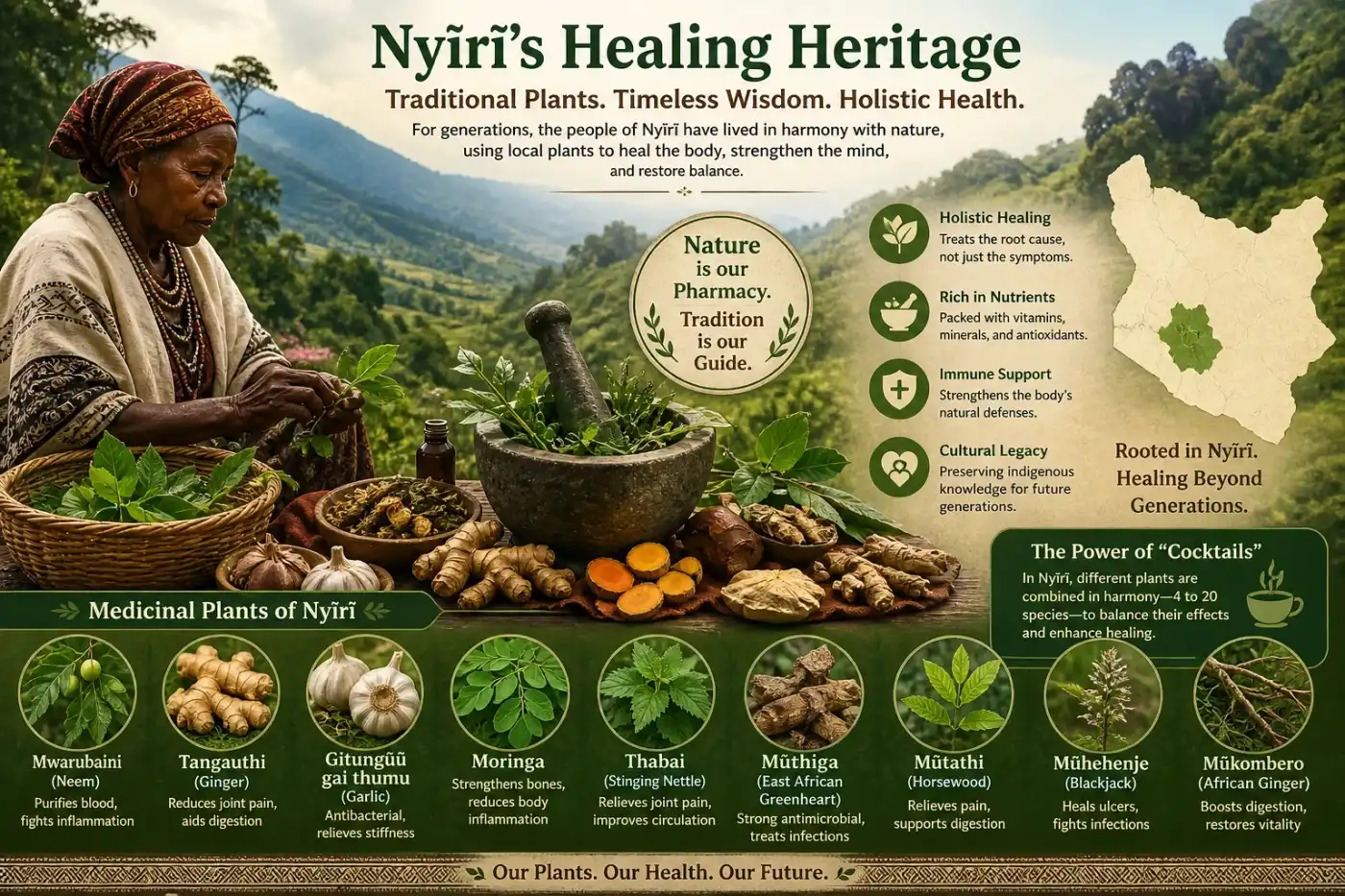
Traditional Medicinal Plants of Nyeri (Nyĩrĩ)
 A cautious look at Kikuyu Bilingual Botanical Dictionary is more helpful than a list of big claims, especially where herbs, nutrition, or health routines are involved. This post keeps the focus on traditional use, safety limits, suitability, and the difference between general wellness information and medical advice without turning general information into medical certainty.
Local Name (Gĩkũyũ) | English Name | Botanical Name | Primary Health Benefits |
|---|---|---|---|
Mwarubaini | Neem | Azadirachta indica | Acts as a systemic anti-inflammatory and blood purifier used for arthritis and joint stiffness. |
Tangauthi (Tangawizi) | Ginger | Zingiber officinale | Reduces joint inflammation, improves circulation, and aids digestion. |
Gitungũrũ gai thumu (Kitungũũ Saũmũ) | Garlic | Allium sativum | Provides anti-inflammatory and antibacterial support for chronic pain and stiffness. |
Moringa | Moringa | Moringa oleifera | Rich in bone-strengthening minerals and helps reduce overall body inflammation. |
Thabai | Stinging Nettle | Urtica dioica | Traditionally used for joint pain and improving blood circulation. |
Mũthiga | East African Greenheart | Warburgia ugandensis | A potent antimicrobial used for respiratory and stomach infections, pain, and fungal issues. |
Mũtathi | - | Clausena anisata | Supports pain relief and inflammation management, particularly for digestive issues. |
Mũnyũa-mai (Mũthĩgĩra) | Wild Dagga | Leonotis leonurus | Acts as a mild sedative and pain reliever for muscular discomfort. |
Mshubiri | Aloe Vera | Aloe vera | Soothes the stomach lining and promotes the healing of internal ulcers. |
Mũrĩ wa Licorice | Licorice Root | Glycyrrhiza glabra | Protects the stomach lining from acid damage. |
Kabeji | Cabbage | Brassica oleracea | Contains natural compounds used to heal stomach ulcers. |
Marigũ (Makũrũ) | Banana (Unripe) | Musa spp. | Helps coat the stomach lining to reduce irritation from ulcers. |
Mũkombero | - | Mondia whitei | Traditionally used to improve digestion and treat various stomach issues. |
Mũiri | African Cherry | Prunus africana | Used for managing internal inflammation within the body. |
Mũhehenje (Mũnyũgũnyũgũ) | Blackjack | Bidens pilosa | A common remedy for general inflammation and stomach-related problems. |
Strategic Database Notes
- Mũthiga Potency: Emphasise that Mũthiga contains active compounds such as warburganal and polygodial, making it a highly potent antimicrobial agent.
- The Cocktail Tradition: In Nyĩrĩ, these medicinal plants are often combined in herbal “cocktails” ranging from 4 to 20 species to balance efficacy and reduce adverse effects.
Dictionary Entry: Mũtathi (Horsewood)
1. Technical Classification
- Scientific Name: Clausena anisata
- Gĩkũyũ Name: Mũtathi
- Family: Rutaceae (The Citrus family)
- Common Names: Horsewood, Magari
- Habitat: Common in the upland forests and bushlands of Central Kenya, including the slopes of the Aberdares in Nyĩrĩ
2. Phytochemical Profile (Deep Research)
The term “anisata” refers to the distinctive anise-like aroma released when the leaves are crushed. This characteristic scent is due to a high concentration of essential oils and bioactive compounds that underpin the plant’s medicinal value.
- Anethole & Methyl Chavicol: These essential oils are responsible for the aromatic profile and exhibit anti-spasmodic properties, helping to relieve muscle spasms and support digestive function.
- Carbazole Alkaloids: Bioactive compounds with demonstrated antifungal, antibacterial, and potential anti-diabetic effects in laboratory studies.
- Furanocoumarins: Contribute to anti-inflammatory and analgesic (pain-relieving) activity, supporting the plant’s traditional use in managing pain and inflammation.
3. Traditional Nyĩrĩ Indications
Within Nyeri (Nyĩrĩ) ethnomedicine, Mũtathi is valued for its versatility, addressing both internal and external health concerns across different age groups and contexts.
- Digestive Tonic: Widely used for stomach aches, bloating, and indigestion. Commonly administered to children experiencing “enda kũimbĩrĩra” (stomach swelling or bloating).
- Pain & Inflammation: Applied in the treatment of migraines, joint pain, and inflammatory conditions. Leaves may be crushed for topical application or boiled to prepare a decoction.
- Post-Natal Care: Incorporated into traditional herbal “cocktails” given to women after childbirth to aid recovery and restore digestive balance.
- Animal Health: Utilised by farmers as a natural dewormer and general remedy for livestock ailments.
4. Modern Pharmacological Evidence
- Analgesic Activity: Scientific studies indicate that extracts of Clausena anisata possess both central and peripheral pain-relieving effects, supporting its traditional use for arthritis and muscular discomfort.
- Anti-Spasmodic Effects: Evidence confirms its capacity to relax smooth muscle tissue, explaining its effectiveness in alleviating stomach cramps and digestive distress.
- Hypoglycaemic Potential: Preliminary research suggests possible blood sugar-lowering effects, making it relevant in discussions around metabolic and lifestyle-related conditions.
5. Preparation & Safety (Evidence-Informed)
- Infusion/Decoction: Leaves or bark are boiled to prepare a therapeutic herbal tea.
- Steam Inhalation: In Nyeri, crushed leaves are added to hot water for steam inhalation to relieve respiratory congestion and headaches.
- Precautions: Although generally regarded as safe in traditional use, the presence of potent compounds such as coumarins necessitates moderation. Care should be taken when combining with stronger herbs like Mũthiga in multi-herb formulations.
Dictionary Entry: Thabai (Stinging Nettle)
1. Technical Classification
- Scientific Name: Urtica dioica
- Gĩkũyũ Name: Thabai
- Family: Urticaceae
- Common Names: Stinging Nettle, Nettle
- Habitat: Thrives in the cool, moist, and fertile volcanic soils of the Nyĩrĩ highlands, often found near homesteads or in forest clearings.
2. Phytochemical & Nutritional Profile (Deep Research)
Thabai is recognised as one of the most nutrient-dense indigenous plants in the Kenyan highlands. Its characteristic “sting” is produced by microscopic hairs (trichomes) that inject histamine, acetylcholine, and serotonin upon contact. Once dried or cooked, these compounds are neutralised, revealing a highly valuable nutritional and medicinal profile.
- Mineral Density: Exceptionally rich in calcium, magnesium, iron, and potassium—essential minerals for bone integrity, muscle function, and optimal blood health.
- Vitamins: High concentrations of Vitamins A, C, and K, alongside several B-complex vitamins that support metabolic and immune function.
- Phenolic Acids & Flavonoids: Contains potent antioxidants such as quercetin and kaempferol, which inhibit inflammatory pathways associated with arthritis and chronic pain conditions.
- Beta-sitosterol: A plant sterol known for supporting prostate health and contributing to the reduction of systemic inflammation.
3. Traditional Nyĩrĩ Indications
In Nyĩrĩ ethnomedicine, Thabai serves both as a staple nutritional vegetable and a targeted therapeutic herb, seamlessly integrated into daily dietary practices and healing traditions.
- Arthritis & Joint Pain (Mĩnyiginyigi): Traditionally applied to reduce swelling and stiffness. In some cases, fresh leaves were deliberately used for “urtication” (controlled stinging) to stimulate localised blood flow in affected joints.
- Anaemia & Blood Health: Commonly recommended for pregnant women and individuals recovering from illness to “ongeza thakame” (increase and purify blood), leveraging its high iron and chlorophyll content.
- Gout & Kidney Support: Acts as a mild diuretic, assisting the body in eliminating excess uric acid and supporting renal function.
- Lactation Support: Frequently incorporated into the diet of nursing mothers to enhance both the quality and volume of breast milk.
4. Modern Pharmacological Evidence
- Anti-Inflammatory Action: Clinical research demonstrates that Nettle extracts can reduce levels of inflammatory mediators in the bloodstream and modulate pain signalling pathways, allowing some arthritis patients to reduce reliance on conventional NSAIDs.
- Blood Sugar Regulation: Emerging evidence suggests that Thabai may stimulate insulin secretion, supporting the regulation of blood glucose levels.
- Benign Prostatic Hyperplasia (BPH): Substantial clinical data supports the use of Nettle root in alleviating symptoms associated with prostate enlargement.
5. Preparation & Safety (Evidence-Informed)
- As Food: In Nyĩrĩ, the leaves are traditionally blanched and combined with mũkimo (a mixture of maize, beans, and potatoes) or added to soups. This preparation method ensures safe consumption while maximising mineral absorption.
- Tea/Decoction: Dried leaves are steeped in hot water (kũrindwo) to produce a medicinal infusion, commonly used for managing joint pain, allergies, and general inflammation.
- Safety: Although generally safe, Thabai exhibits mild diuretic effects. Individuals taking blood pressure medication or anticoagulants should exercise caution, as its high Vitamin K content may influence blood clotting mechanisms.
Dictionary Entry: Mũkombero (African Ginger)
1. Technical Classification
- Scientific Name: Mondia whitei
- Gĩkũyũ Name: Mũkombero
- Family: Apocynaceae
- Common Names: African Ginger, White's Ginger
- Habitat: A vigorous climbing woody plant found in the moist forest fringes and riverine thickets of the Nyĩrĩ highlands.
2. Phytochemical Profile (Deep Research)
Mũkombero is distinguished by its characteristic vanilla-like aroma, which reflects a complex and pharmacologically active phytochemical composition. The root system, in particular, contains a spectrum of bioactive compounds that underpin its traditional and modern therapeutic relevance.
- 2-hydroxy-4-methoxybenzaldehyde: The dominant aromatic compound responsible for its signature scent and flavour profile, also contributing to its digestive-stimulant properties.
- Triterpenoids (Lupeol, α-amyrin): Bioactive compounds known for their anti-inflammatory and hepatoprotective (liver-protecting) effects.
- Saponins & Coumarins: These compounds enhance antimicrobial activity and support improved blood circulation.
- Zinc & Essential Minerals: Rich in zinc, iron, and calcium, reinforcing its role as a restorative tonic for systemic health and vitality.
3. Traditional Nyĩrĩ Indications
Within Nyĩrĩ ethnobotanical practice, Mũkombero is regarded as a balancing herb that harmonises internal physiological systems. Its applications extend across digestive, physical, and neurological domains.
- Digestive Support: A primary remedy for indigestion and reduced appetite. Traditionally chewed fresh to stimulate gastric secretions and improve digestive efficiency.
- General Tonic: Widely used to combat fatigue, enhance stamina, and improve overall physical resilience.
- Stress & Mood Regulation: Traditionally believed to reduce stress levels and promote mental clarity and emotional stability.
- Respiratory Health: Incorporated into multi-herb “cocktails” in Nyeri for managing asthma, chest congestion, and related respiratory conditions.
4. Modern Pharmacological Evidence
- Gastrointestinal Activity: Scientific studies support its role in enhancing gastric motility and secretion, validating its traditional use as a digestive stimulant.
- Aphrodisiac & Vitality Effects: Research indicates improved blood circulation and hormonal modulation, aligning with its reputation for boosting vitality and reproductive health.
- Antidepressant Potential: Emerging evidence suggests mild central nervous system activity with antidepressant-like effects, supporting its traditional use in mood regulation.
- Antioxidant Action: High phenolic content contributes to free radical scavenging, supporting cellular health and reducing oxidative stress.
5. Preparation & Safety (Evidence-Informed)
- Chewing: The most traditional method involves chewing fresh or dried root bark. The fibrous inner core is typically discarded after extraction of flavour and active compounds.
- Powdered Form: Dried roots are ground into a fine powder and incorporated into tea, porridge, or warm milk for sustained intake.
- Infusion: Steeped in hot water to produce an aromatic herbal tea that supports digestion and general wellness.
- Safety: Generally regarded as safe for long-term use. However, due to its appetite-stimulating effects, individuals managing specific dietary or weight objectives should monitor intake.
Dictionary Entry: Mũhehenje (Blackjack)
1. Technical Classification
- Scientific Name: Bidens pilosa
- Gĩkũyũ Name: Mũhehenje (also known as Mũcege or Mũnyũgũnyũgũ in other dialects)
- Family: Asteraceae
- Common Names: Blackjack, Cobbler's Pegs
- Habitat: An extremely resilient herb found in disturbed soils, gardens, and roadsides throughout Nyĩrĩ and the wider Kenyan highlands.
2. Phytochemical Profile (Deep Research)
Although often regarded as a common weed, Mũhehenje possesses a highly complex phytochemical profile, with over 200 identified bioactive compounds contributing to its wide therapeutic range in traditional and modern medicine.
- Polyacetylenes: Primary bioactive constituents responsible for strong antimicrobial, antifungal, and anti-inflammatory effects.
- Flavonoids (Quercetin, Luteolin): Potent antioxidants that protect cellular structures and support gastrointestinal health by reducing oxidative stress in the stomach lining.
- Phenolic Acids: Play a key role in immune modulation and systemic inflammation control.
- Essential Minerals: Contains iron, zinc, and vitamin C, contributing to its nutritional and restorative value in traditional diets.
3. Traditional Nyĩrĩ Indications
In Nyĩrĩ ethnobotanical practice, Mũhehenje is widely regarded as a versatile “first-aid” plant, used for both acute injuries and chronic internal conditions.
- Stomach Ulcers (Ironda cia nda): One of its most important uses in Nyĩrĩ. The juice or infusion is believed to soothe the stomach lining and assist in eliminating H. pylori, a bacterium associated with ulcer formation.
- Wound Healing: Fresh leaves are crushed and applied directly to cuts and infected wounds to stop bleeding and reduce risk of sepsis.
- Digestive Distress: Used traditionally to manage diarrhoea, bloating, and general gastrointestinal discomfort.
- Respiratory Support: Frequently included in multi-herb “cocktails” for managing colds, flu symptoms, and sore throats.
4. Modern Pharmacological Evidence
- Anti-Ulcer Activity: Research confirms that Bidens pilosa extracts significantly reduce gastric acid secretion and protect the gastric mucosa from damage, supporting its traditional use in ulcer management.
- Broad-Spectrum Antimicrobial Action: Studies demonstrate effectiveness against bacteria, fungi, and certain viruses, validating its application in wound care and infection control.
- Anti-Diabetic Potential: Clinical investigations suggest improved insulin sensitivity and protection of pancreatic beta cells, indicating potential in blood sugar regulation.
- Anti-Inflammatory Effects: The plant inhibits pro-inflammatory cytokine production, supporting its use in arthritis and other inflammatory conditions.
5. Preparation & Safety (Evidence-Informed)
- Juice: For ulcer management, fresh leaves are thoroughly washed, crushed or blended, and the extracted juice consumed directly.
- Infusion: Leaves and flowers may be dried and steeped in hot water to produce a daily medicinal tea.
- Vegetable Use: In some Nyĩrĩ households, young shoots are blanched and eaten as a leafy vegetable, similar in preparation to Thabai, though with a slightly resinous taste.
- Safety: Generally considered safe for most users. However, due to its blood sugar-lowering potential, individuals on anti-diabetic medication should monitor glucose levels carefully during use.
Limits and safety notes
This topic can affect health, money, or personal risk, so the article should be treated as general information. Readers should check current rules, product terms, professional guidance, or medical advice where the decision could have serious consequences.
Summary of Nyerian Botanical Solutions
This guide provides a practical, evidence-informed overview of the rich ethnobotanical tradition found in Nyĩrĩ (Nyeri), Kenya. It documents indigenous Gĩkũyũ knowledge alongside modern pharmacological research, aiming to preserve and validate the use of local plant species in managing common health challenges.
Key Takeaways
- Targeted Relief: Specific herbs such as Thabai (Stinging Nettle) and Mũthiga (Greenheart) are traditionally valued for their potent anti-inflammatory properties, particularly in managing chronic joint and back pain.
- Digestive Healing: Natural remedies like Mũhehenje (Blackjack) and Mũkombero are commonly used to soothe the stomach lining and support recovery from ulcers and related digestive discomfort.
- The Cocktail Tradition: In Nyĩrĩ ethnobotanical practice, plants are rarely used in isolation. Instead, they are blended into carefully balanced combinations of 4 to 20 species to improve efficacy, synergy, and safety outcomes.
- Expert Integration: While deeply rooted in cultural heritage, these botanical solutions are best applied within a holistic wellness framework that combines traditional knowledge with modern clinical guidance.
This reference serves as a cornerstone of the Botanical Solutions project, finalised in April 2026, with the aim of empowering local communities through accurate and well-researched herbal knowledge.