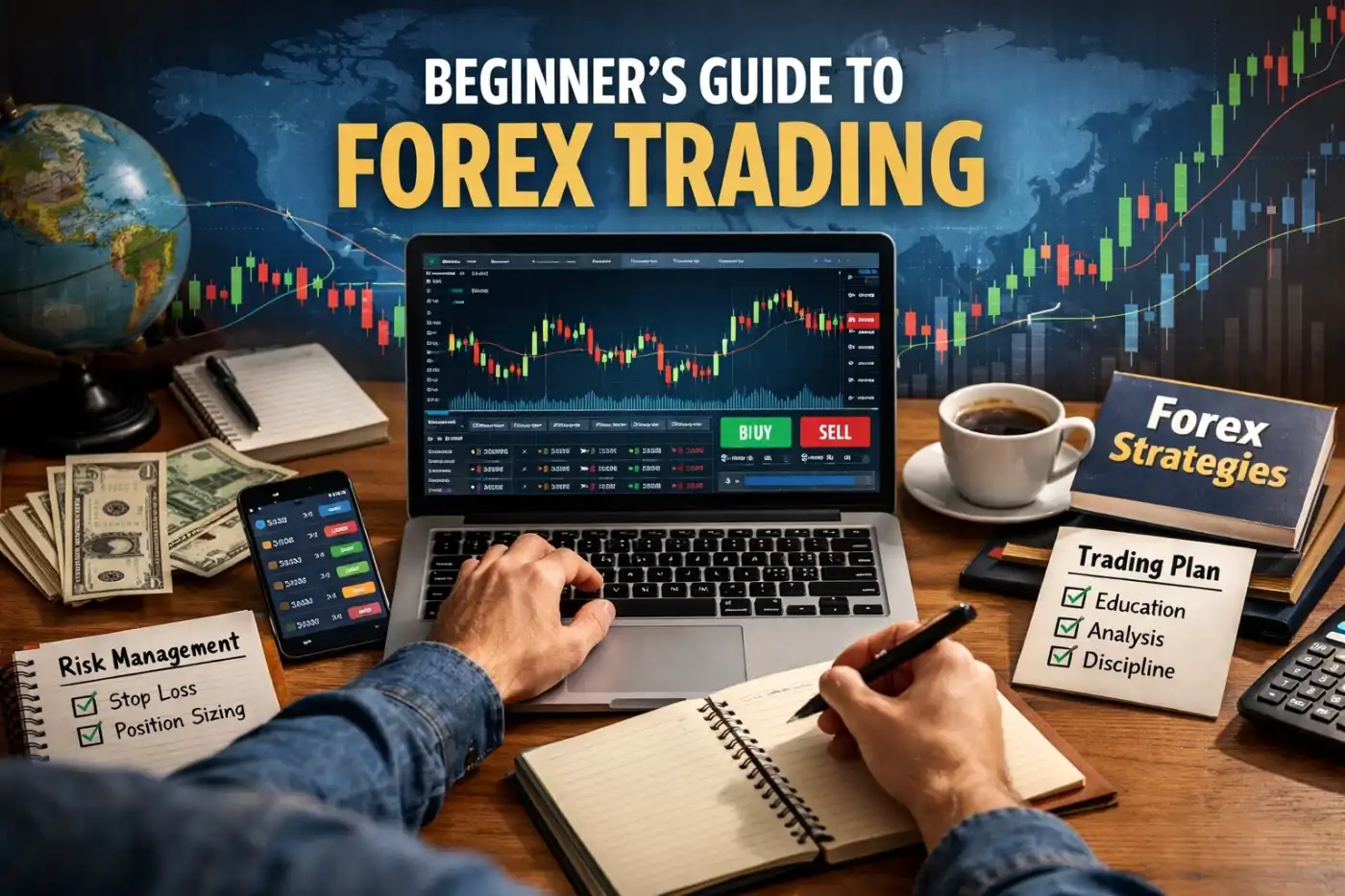
Forex Trading for Beginners: The practical overview to Starting a Forex Trading Business Successfully
How to Start Forex Trading Business can look straightforward until fees, regulation, repayment pressure, or market risk enter the picture. The discussion here stays grounded in risk, affordability, regulation, repayment or trading discipline, and when professional advice is needed rather than promising easy outcomes. This practical beginner overview explains how forex trading works, how to start safely, and how to develop a sustainable trading approach. Rather than promising unrealistic profits, this guide focuses on practical systems, psychological discipline, and risk management principles used by professional traders. If you are new to trading or exploring whether currency trading can become a legitimate income stream, this article will walk you structured through everything you need to know -- from terminology and broker selection to strategy development and capital protection. Many beginners first encounter trading through curiosity about online income opportunities. Before committing capital, it is wise to understand realistic expectations and earning potential. You may also want to explore whether trading can become a full-time career in this detailed analysis: can you make a living in forex trading.
What Is Forex Trading and How the Global Currency Market Actually Works
Forex trading, short for foreign exchange trading, involves buying one currency while simultaneously selling another. Currencies are traded in pairs because exchange rates measure the relative value between two economies. Unlike stock markets that operate within national exchanges, forex functions as a decentralised global network of banks, financial institutions, corporations, hedge funds, and retail traders. The forex market processes trillions of dollars daily, making it the most liquid financial market in the world. Liquidity means trades execute quickly with minimal price manipulation compared to smaller markets.
Understanding Currency Pairs
Every forex trade involves a currency pair such as EUR/USD, GBP/USD, or USD/JPY. The first currency is called the base currency, while the second is the quote currency. When traders buy a pair, they expect the base currency to strengthen relative to the quote currency. Currency pairs are grouped into three categories:
- Major pairs - High liquidity pairs involving USD.
- Minor pairs - Major economies excluding USD.
- Exotic pairs - Emerging market currencies with higher volatility.
Beginners should prioritise major pairs due to tighter spreads and predictable behaviour.
Bid, Ask, and Spread Explained Simply
Forex prices always show two values:
- Bid price: the price you sell at.
- Ask price: the price you buy at.
- Spread: the difference between bid and ask.
The spread represents transaction cost. Lower spreads generally indicate better trading conditions.
Leverage and Margin -- useful but Dangerous Tools
Leverage allows traders to control large positions using small deposits. For example, 1:100 leverage means £100 controls £10,000 worth of currency. While leverage increases potential returns, it equally increases losses. Many beginners fail not because of poor analysis but because they use excessive leverage without proper risk management. A deeper understanding of calculated entries and risk positioning is explained in this practical guide: trade entries explained for beginners.
Forex Market Sessions
The market operates 24 hours a day during weekdays across four main sessions:
- Asian Session
- London Session
- New York Session
- Session overlaps (highest volatility)
Most professional traders focus on London and New York sessions because liquidity and price movement increase significantly.
Example of a Basic Forex Trade
Suppose EUR/USD trades at 1.1000 and you believe the euro will strengthen. You buy the pair. If price rises to 1.1100, you gain 100 pips. If it falls to 1.0900, you lose 100 pips. Profit or loss depends on lot size and risk exposure. This simple example highlights an essential truth: trading success depends less on predicting direction and more on controlling risk.
How to Start Forex Trading as a Beginner: structured Practical Roadmap
Starting forex trading without a structured roadmap often leads to costly mistakes. Successful traders treat trading as a skill-based profession rather than gambling. The following framework provides a realistic pathway for beginners.
1. Learn the Core Foundations First
Before opening any account, understand essential trading concepts:
- Pips and lot sizes
- Market structure
- Support and resistance
- Trend behaviour
- Risk-to-reward ratios
Beginners who skip fundamentals typically struggle with consistency. A structured beginner overview can be found here: forex trading beginner overview.
2. Choose a Reliable Broker Carefully
Your broker acts as your gateway to the market. Evaluate brokers based on:
- Regulation and transparency
- Execution speed
- Trading costs
- Withdrawal reliability
- Platform stability
A trustworthy broker protects capital and ensures fair pricing conditions.
3. Open a Demo Trading Account
Demo accounts simulate real trading conditions without financial risk. Use them to:
- Learn platform navigation
- Test strategies
- Understand order execution
- Build confidence
Remain on demo trading until results become consistently structured rather than lucky.
4. Develop a Personal Trading Plan
A trading plan defines:
- Entry conditions
- Exit rules
- Maximum risk per trade
- Trading schedule
- Performance evaluation metrics
Without a written plan, emotional decisions dominate trading behaviour.
5. Learn Technical and Fundamental Analysis
Technical analysis studies price charts and patterns, while fundamental analysis evaluates economic indicators such as interest rates, inflation, and employment data. Combining both approaches improves decision-making accuracy. For actionable strategy insights, review these proven forex trading tips for consistent improvement.
6. Start Small with Real Capital
Transitioning from demo to live trading should involve minimal capital. The goal is psychological adaptation, not immediate profits. Small positions allow traders to experience real emotions without catastrophic losses.
7. Maintain a Trading Journal
Record every trade including:
- Entry reasoning
- Risk level
- Emotional state
- Outcome
Reviewing journal data reveals behavioural patterns that charts alone cannot show.
8. Continue Education Continuously
The market evolves constantly. Traders who stop learning eventually lose adaptability. Study market sentiment, macroeconomics, and behavioural finance regularly. Understanding sentiment shifts is particularly useful, as demonstrated in this analysis of Turkish lira market sentiment.
How Much Money Do You Need to Start Forex Trading and Manage Risk Properly
One of the most searched beginner questions is how much capital is required to begin trading. The honest answer depends on goals, risk tolerance, and trading style.
Minimum Deposit vs Practical Capital
Although some brokers allow deposits as low as £10, practical trading typically begins between £300 and £1,000. Smaller balances limit flexibility and increase emotional pressure.
Risk Management Principles
Professional traders rarely risk more than 1-2% of account balance per trade. This rule prevents single losses from destroying trading capital. Example:
- Account size: £1,000
- Risk per trade: 1%
- Maximum loss allowed: £10
This approach ensures longevity, which is the true edge in trading.
Trading Styles and Capital Requirements
- Scalping: Requires fast execution and higher focus.
- Day trading: Multiple trades daily.
- Swing trading: Positions held for days.
- Position trading: Long-term macro approach.
Swing trading is often ideal for beginners because it reduces emotional pressure. Consistency develops gradually. If your goal is steady profitability rather than quick gains, read: make consistent money with forex.
Is Forex Trading Good for Beginners? Advantages, Risks, and Realistic Expectations
Forex trading attracts beginners because of accessibility and income potential, yet misunderstanding risks leads many newcomers to disappointment. Evaluating both advantages and challenges provides realistic expectations.
Advantages of Forex Trading
- Low entry barriers
- 24-hour trading availability
- High liquidity
- Flexible trading styles
- Remote income potential
Unlike traditional investments, traders can potentially profit in both rising and falling markets.
Challenges Beginners Face
- Emotional decision-making
- Over-leveraging accounts
- Lack of structured strategy
- Unrealistic expectations
- Information overload
Many traders initially treat markets like entertainment rather than business. Learning through humour and community experiences can sometimes help reinforce lessons -- see these relatable memes for every trader.
The Psychology of Trading Success
Psychology often determines success more than strategy. Fear causes premature exits, while greed encourages excessive risk-taking. Developing emotional neutrality is essential. Professional traders focus on process rather than individual trade outcomes.
Common Beginner Mistakes
- Changing strategies frequently
- Ignoring stop-loss rules
- Trading news impulsively
- Revenge trading after losses
Understanding market mechanics reduces these errors. You may also explore advanced instruments such as trading multipliers explained once fundamentals are mastered.
Forex Trading vs Other Online Investments
Forex differs from affiliate marketing or passive investing because it requires active decision-making. Comparing models helps determine whether trading suits your personality and goals. An interesting comparison discussion is available here: affiliate vs binary options perspectives.
Building a Sustainable Forex Trading Business and Long-Term Growth Strategy
Viewing forex trading as a business rather than a hobby dramatically changes outcomes. Sustainable traders prioritise systems, performance metrics, and capital preservation.
Create Structured Trading Routines
Daily routines improve discipline:
- Market analysis before sessions
- Predefined watchlists
- Limited trading hours
- Post-trade review
Focus on Market Structure Understanding
Markets move through trends, consolidations, and reversals. Recognising these phases improves trade timing significantly. For deeper technical foundations, explore advanced forex trading concepts.
Performance Tracking and Metrics
Track measurable data:
- Win rate
- Average risk-to-reward ratio
- Monthly drawdown
- Consistency score
Professional improvement relies on data analysis rather than intuition.
Capital Growth Strategy
Increase position sizes only after sustained profitability over several months. Gradual scaling protects psychological stability.
Diversification and Investment Expansion
Many traders eventually diversify into property, equities, or alternative investments. For example, long-term investors sometimes balance trading income with real estate opportunities such as buying investment plots in Nyeri.
The Long-Term Trader Mindset
Successful traders accept uncertainty. No strategy wins every time. Instead, profitability emerges from disciplined execution across hundreds of trades. Consistency, patience, and continuous improvement form the real competitive advantage in forex trading.
Risk checks that matter for this finance topic
How to Start Forex Trading Business needs to be careful because money advice can affect real budgets, debt, and risk tolerance. The useful angle is risk, affordability, regulation, repayment or trading discipline, and when professional advice is needed. A stronger page separates explanation from recommendation and makes clear which details the reader must verify locally.
- Affordability: compare fees, repayments, losses, or opportunity cost before focusing on speed or convenience.
- Regulation: check whether a provider, platform, or product is allowed and accountable in the reader's location.
- Suitability: high-risk products, borrowing, and trading tools are not appropriate for every reader.
Limits and safety notes
This topic can affect health, money, or personal risk, so the article should be treated as general information. Readers should check current rules, product terms, professional guidance, or medical advice where the decision could have serious consequences.
Final Thoughts: Your Path to Becoming a Skilled Forex Trader
Forex trading offers genuine opportunity, but only for individuals willing to approach it professionally. The journey involves education, practice, emotional control, and realistic expectations. Begin with strong foundations, practise extensively using demo accounts, implement strict risk management, and focus on gradual skill development rather than fast profits. Over time, experience compounds just like capital. The traders who succeed are not those who predict markets closely, but those who manage risk intelligently and remain consistent through changing conditions. If you treat trading as a long-term skill rather than a shortcut to wealth, forex can become a useful financial tool capable of supporting both active income and broader investment growth.