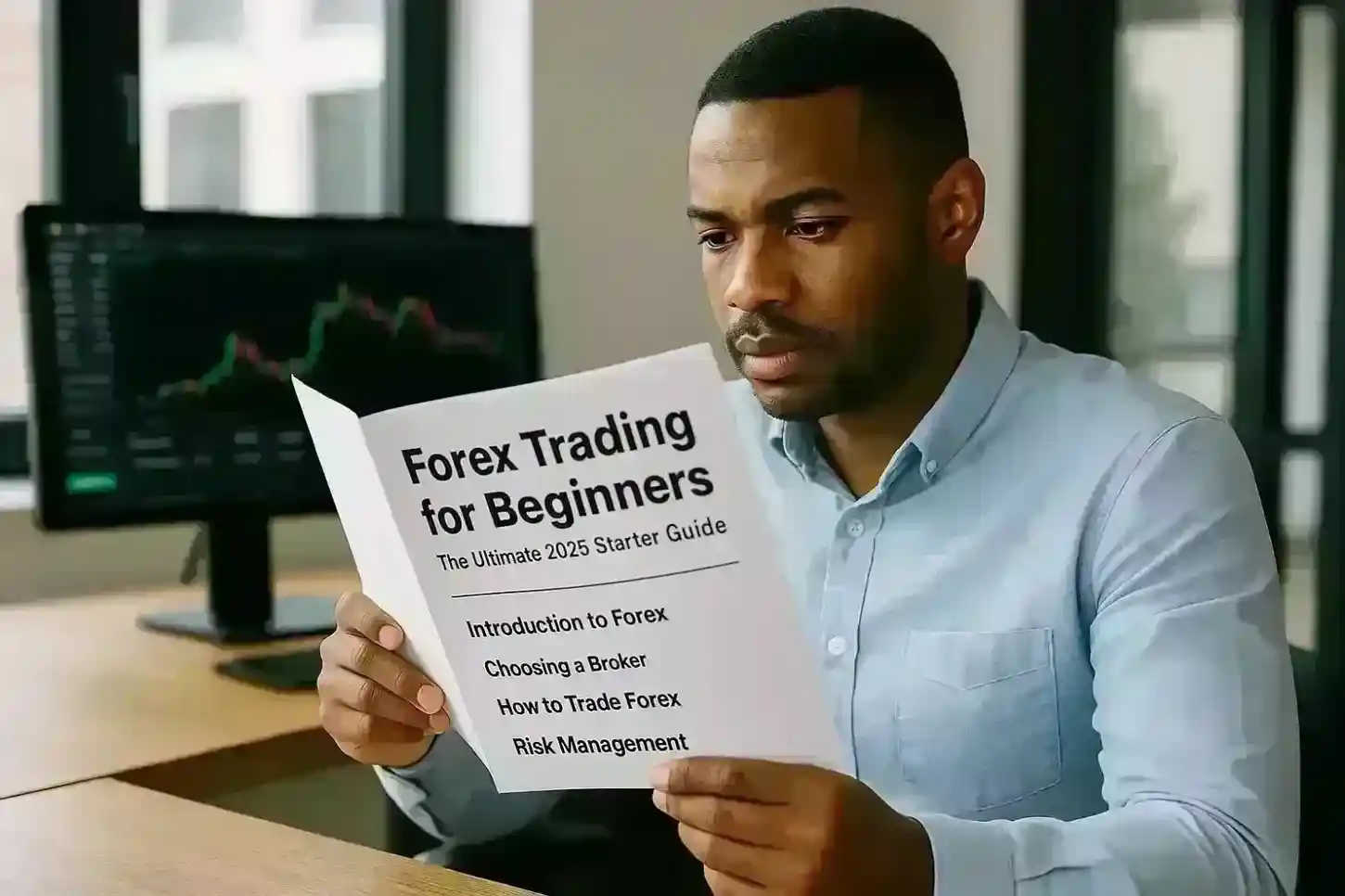

What this page helps you decide
Before acting on Forex Trading for Beginners: The UltimateStarter Guide, it helps to slow down and separate explanation from recommendation. The discussion here stays grounded in risk, affordability, regulation, repayment or trading discipline, and when professional advice is needed rather than promising easy outcomes.
What Is Forex Trading?
Forex, short for "foreign exchange," is the global marketplace where national currencies are exchanged against one another. It involves the simultaneous buying of one currency and selling of another, making it a dynamic, fast-paced market for traders seeking to profit from fluctuating currency values. For instance, when trading the EUR/USD currency pair, you're speculating whether the Euro will rise or fall in value relative to the US Dollar. This massive, decentralised market is the largest financial market in the world, with a daily trading volume exceeding $7 trillion as of 2026. Forex trading takes place over-the-counter (OTC), meaning transactions occur directly between parties, usually via electronic trading networks or through brokers. Unlike traditional stock exchanges, the Forex market operates 24 hours a day, five days a week. This continuous trading window spans across major financial centres—starting in Sydney, moving through Tokyo and London, and closing in New York. This non-stop action makes it ideal for traders in different time zones and those seeking flexible trading hours. Several key factors drive price movements in the Forex market:
- Macroeconomic indicators, such as inflation rates, employment data, and GDP growth
- Geopolitical events, including wars, elections, and international agreements
- Monetary policy decisions, especially interest rate announcements from central banks
- Market sentiment, which reflects the emotional behaviour and expectations of market participants
Understanding these dynamics is essential for any aspiring trader who wants to make informed decisions and develop profitable strategies.
Why Trade Forex in 2026?
The Forex market has experienced tremendous evolution, and 2026 promises even more opportunities for both new and experienced traders. Several key factors make this year an exciting time to engage in Forex trading:
Advancements in Technology (Faster Platforms, AI Analysis)
-
In 2026, trading technology is more advanced than ever. Fast and reliable trading platforms have become the norm, with minimal latency and quick execution times. These platforms allow traders to respond swiftly to market changes, which is crucial for capitalising on opportunities in real-time.
Artificial Intelligence (AI) is also revolutionising Forex trading. AI-driven tools can analyse vast amounts of data, identify market patterns, and predict price movements with higher accuracy. Algorithms help traders automate their strategies, making trading more accessible and efficient. Even novice traders can take advantage of AI-powered signals and analysis to make informed decisions.
-
Increased Access to Affordable Trading Tools and Free Learning Resources
-
One of the greatest advancements in Forex trading is the democratisation of access. In 2026, anyone with a computer or smartphone can start trading. Brokerages now offer more user-friendly and affordable trading tools, including advanced charting software, risk management systems, and trading simulators.
Learning Forex is also easier than ever. Many online platforms, YouTube channels, and even free courses offer practical tutorials on all aspects of trading, from the basics to advanced strategies. The availability of free resources allows beginners to learn at their own pace without the burden of high education fees.
-
Flexible Trading Hours, Ideal for Part-Time Traders
-
The Forex market operates 24 hours a day, five days a week, which means that traders can choose when to trade based on their schedules. For part-time traders or individuals with full-time jobs, this flexibility is a major benefit.
Whether you're an early bird or a night owl, there are always active trading sessions, allowing you to trade during your most convenient hours. This level of flexibility makes Forex a suitable option for people looking to supplement their income, even with limited time.
-
High Liquidity, Making it Easy to Enter and Exit Trades
-
Forex is one of the most liquid markets in the world. High liquidity ensures that there is always a buyer or seller for a particular currency pair, allowing you to enter and exit trades swiftly without much price slippage.
This liquidity reduces the risk of market manipulation and enhances the overall stability of the market, making it more reliable for both short-term and long-term trades. Traders can leverage this advantage to make efficient trades, regardless of their experience level.
-
Basic Terminologies You Must Know
Before you begin trading Forex, it's crucial to get familiar with the fundamental terms that will guide your trading decisions. Understanding these basic terminologies will help you navigate the market with confidence.
Pip: Smallest Price Movement in a Currency Pair
-
What is a Pip? A pip (short for "percentage in point") represents the smallest price movement that a currency pair can make based on market convention. Typically, a pip is equal to 0.0001 for most currency pairs, except for those involving the Japanese yen, where a pip equals 0.01. For example, if the EUR/USD moves from 1.1150 to 1.1151, it has moved 1 pip.
Why Are Pips Important? Pips are used to measure price changes in the Forex market and are essential for calculating profit and loss. By understanding how pips work, traders can better assess the potential risk and reward of their trades.
-
Lot: Standard Unit Size of a Forex Trade
-
What is a Lot? A lot refers to the standardised quantity of a currency that is traded in a single transaction. There are several types of lots:
-
Standard Lot: 100,000 units of the base currency.
Mini Lot: 10,000 units of the base currency.
Micro Lot: 1,000 units of the base currency.
-
Why Are Lots Important? The size of the lot determines the value of each pip movement in a trade. For example, a standard lot of EUR/USD means that each pip movement will be worth $10. Traders must choose their lot size based on their account balance and risk tolerance to control how much they can afford to lose or gain per trade.
-
Leverage: Borrowed Capital That Allows You to Control a Larger Position
-
What is Leverage? Leverage allows you to control a larger position in the market with a smaller amount of capital. For instance, if a broker offers you 50:1 leverage, you can control a $50,000 position with just $1,000 in your account. Leverage amplifies both potential profits and losses, making it a useful yet risky tool.
Why Is Leverage Important? Leverage enables traders to maximise returns without needing to deposit large sums of capital upfront. However, it also increases risk, so it's important to use leverage cautiously and apply sound risk management strategies to avoid significant losses.
-
Spread: The Difference Between the Bid and Ask Price
-
What is a Spread? The spread refers to the difference between the bid price (the price at which you can sell a currency) and the ask price (the price at which you can buy a currency). For example, if the EUR/USD bid price is 1.1150 and the ask price is 1.1152, the spread is 2 pips.
Why Is the Spread Important? The spread is essentially a transaction cost in Forex trading, as it represents the broker's profit. A tighter spread (lower difference between the bid and ask prices) is ideal because it means lower transaction costs. Spreads vary between brokers and currency pairs, with major pairs generally having tighter spreads.
-
Margin: The Amount Required in Your Account to Open a Trade
-
What is Margin? Margin is the amount of money required in your trading account to open and maintain a position. It's essentially a security deposit that ensures you can cover potential losses. For example, if you want to open a position with $50,000 in value and your broker offers 50:1 leverage, the required margin would be $1,000.
Why Is Margin Important? Margin enables you to trade larger positions than your account balance alone would allow. However, it's important to understand margin calls and the risks associated with margin trading. If your losses exceed the available margin, you may receive a margin call, requiring you to deposit additional funds to maintain your position.
-
How the Forex Market Works
The Forex market operates differently from other financial markets. Unlike the stock market, where you buy and sell individual stocks, Forex trading involves currency pairs. You trade one currency against another, speculating on whether the value of one will rise or fall against the other. Understanding how the Forex market works is essential for any trader looking to get involved in this global financial market.
Forex Trading Happens in Pairs (For Example, EUR/USD)
-
What Are Currency Pairs? Forex trading always takes place in pairs, which means you are simultaneously buying one currency and selling another. Each pair consists of two currencies:
-
The base currency: The first currency in the pair (e.g., EUR in EUR/USD).
The quote currency: The second currency in the pair (e.g., USD in EUR/USD).
-
How Does it Work? If you buy a currency pair like EUR/USD, you are essentially buying Euros (the base currency) and selling U.S. Dollars (the quote currency). Conversely, if you sell EUR/USD, you're selling Euros and buying U.S. Dollars. Traders make profits by speculating on the changes in the value of one currency relative to another.
-
Types of Forex Pairs. There are three main categories of currency pairs in the Forex market. Understanding these pairs is key to successful trading.
-
Major Pairs (e.g., EUR/USD, GBP/USD)
-
What Are Major Pairs? Major pairs are the most commonly traded currency pairs in the Forex market. They consist of the most liquid and stable currencies, such as the U.S. Dollar (USD) and other major currencies like the Euro (EUR), British Pound (GBP), and Japanese Yen (JPY).
Why Are They Popular? Major pairs typically offer the highest liquidity and the lowest spreads, making them ideal for most traders. These pairs are often the most affected by global economic news and events, providing ample trading opportunities.
-
Minor Pairs (e.g., EUR/GBP, AUD/JPY)
-
What Are Minor Pairs? Minor pairs, or cross-currency pairs, do not involve the U.S. Dollar. These pairs are composed of currencies from smaller economies or those outside the major economic zones. Examples include EUR/GBP (Euro/British Pound) or AUD/JPY (Australian Dollar/Japanese Yen).
Why Are They Useful? Minor pairs offer additional opportunities for diversification, but they tend to have wider spreads and lower liquidity compared to major pairs. They are ideal for traders who want to focus on currency relationships outside of the U.S. Dollar.
-
Exotic Pairs (e.g., USD/TRY, EUR/ZAR)
-
What Are Exotic Pairs? Exotic pairs consist of a major currency and a currency from an emerging market or smaller economy. Examples include USD/TRY (U.S. Dollar/Turkish Lira) and EUR/ZAR (Euro/South African Rand).
Why Are They Risky? Exotic pairs can offer higher volatility and greater profit potential, but they also come with increased risk. The liquidity is lower in these pairs, and they are more susceptible to unpredictable price movements driven by political instability, economic changes, or geopolitical events.
-
-
Key Market Participants The Forex market is the largest and most liquid market in the world, with a daily trading volume exceeding $7 trillion. Several key players are involved in the Forex market, each playing a critical role in its dynamics:
-
Central Banks
-
What Role Do Central Banks Play? Central banks are responsible for managing a country's monetary policy and currency supply. They influence the Forex market by adjusting interest rates, conducting open market operations, and intervening directly in the market. Major central banks, such as the Federal Reserve (U.S.), European Central Bank (ECB), and Bank of Japan (BoJ), have a significant impact on currency movements due to their control over national currencies.
Why Are Central Banks Important? Central banks can influence currency values through interest rate changes, quantitative easing, or even direct interventions to stabilise or devalue a currency. Forex traders pay close attention to central bank announcements for clues on future market movements.
-
Commercial Banks
-
What Role Do Commercial Banks Play? Commercial banks engage in foreign exchange trading as part of their business operations. They offer currency exchange services to businesses, investors, and individuals, and they trade currencies for profit. Banks also play a vital role in providing liquidity to the market.
Why Are They Important? Commercial banks are among the largest traders in the Forex market, and their actions can influence market trends. Their demand for currencies, particularly in large volumes, helps set exchange rates.
-
Corporations
-
What Role Do Corporations Play? Global corporations use Forex to hedge against currency risk when conducting international trade or investment. For example, a U.S.-based company importing goods from Europe may use Forex trading to lock in the current exchange rate and avoid future fluctuations in currency prices.
Why Are They Important? Corporations drive a significant portion of the Forex market activity, as they trade currencies to manage their exposure to foreign exchange risk. Their buying and selling activity can influence currency values, particularly concerning their global operations.
-
Hedge Funds
-
What Role Do Hedge Funds Play? Hedge funds are active participants in the Forex market, engaging in speculative trading and leveraging their strategies to profit from short-term currency fluctuations. These funds often use complex trading strategies, including algorithmic and high-frequency trading.
Why Are They Important? Hedge funds can move large amounts of capital in and out of the Forex market, which can lead to significant market shifts. Their actions and strategies often serve as an indicator of potential price movements in the market.
-
Retail Traders (Like You!)
-
What Role Do Retail Traders Play? Retail traders are individual investors who trade in the Forex market through online brokers. Thanks to advancements in technology, retail traders now have access to the same tools and platforms that institutional traders use, allowing them to compete in the global market.
Why Are They Important? Retail traders provide liquidity and volume that drive price discovery. While retail traders account for a smaller portion of overall trading volume compared to institutional players, their collective actions can influence market trends and volatility.
-
-
How to Start Trading Forex: structured
If you're new to Forex trading, getting started can seem overwhelming. However, by following a structured structured approach, you can navigate the process smoothly and build a solid foundation for your trading journey. Here's a practical overview to help you begin:
1. Set Clear Goals
Before diving into Forex trading, it's crucial to have a clear understanding of why you want to trade and what you aim to achieve. Setting specific goals helps guide your trading decisions and develop a strategy suited to your needs.
Ask Yourself:
-
Are You Trading for Long-Term Income or Short-Term Profits?
-
Long-Term Income: If you plan to trade for long-term wealth creation, your approach will be focused on more strategic decisions and position trades, aiming for smaller but consistent returns over time. This could involve trading on a weekly or monthly timeframe.
Short-Term Profits: If your goal is to capitalise on quick market movements, you may consider day trading or swing trading, where you'll aim to profit from smaller, more frequent price changes within a day or week.
-
How Much Time Can You Dedicate Daily/Weekly?
-
The amount of time you can dedicate to trading will influence your approach. Day traders typically need to monitor the market closely throughout the day, while swing traders can place fewer trades over several days, which might suit those with a busy schedule.
-
Why Is This Important? Setting clear goals will help you decide on your trading style (e.g., scalping, day trading, swing trading, position trading) and risk tolerance, which ultimately informs your trading plan and strategies.
-
2. Choose a Reliable Forex Broker
Selecting a trustworthy Forex broker is essential because your broker will provide you with access to the markets, as well as the necessary tools to trade. The right broker can make all the difference in your trading experience.
Factors to Consider:
-
Regulation Status: Ensure your broker is regulated by a reputable financial authority, such as the U.S. Commodity Futures Trading Commission (CFTC), the Financial Conduct Authority (FCA) in the UK, or the Australian Securities and Investments Commission (ASIC). This ensures that the broker operates under strict standards and offers a level of security for your funds.
Trading Fees/Spreads: Different brokers have different fee structures. Some charge a spread (the difference between the bid and ask prices) while others may charge commission fees. Low spreads and competitive commissions are important for reducing your overall trading costs.
Available Assets and Platforms (e.g., MetaTrader 4/5): Choose a broker that provides access to a variety of currency pairs, along with any other assets you may be interested in trading (such as commodities or indices). MetaTrader 4 (MT4) and MetaTrader 5 (MT5) are two of the most popular platforms, providing advanced charting tools, trading robots, and user-friendly interfaces.
Customer Service Quality: Good customer service is essential for resolving any issues or questions you may have during your trading journey. Look for a broker that provides 24/7 customer support through multiple channels (live chat, phone, email) and has a strong reputation for assisting traders.
Why Is This Important? Your choice of broker affects your ability to execute trades efficiently and manage your funds safely. Ensure your broker offers a secure, regulated environment with fair trading terms.
-
3. Open and Fund Your Trading Account
Once you've selected a broker, the next step is to open and fund your trading account. Brokers typically require some basic personal information to verify your identity.
What You'll Need:
-
Basic KYC Documentation: Most brokers will require you to complete a Know Your Customer (KYC) process, which involves submitting identification documents (like a passport or driver's license) and proof of address (such as a utility bill or bank statement).
Minimum Deposit: Brokers may require a minimum deposit to start trading. The amount varies depending on the broker, but many offer low minimum deposits (as little as $50 or $100). Always check the deposit and withdrawal terms to ensure they align with your budget and expectations.
Why Is This Important? Opening and funding your trading account is the gateway to real trading. Make sure to choose an account type that suits your needs, whether it's a demo account for practice or a live account for actual trading.
-
4. Download a Trading Platform
A trading platform is the software that allows you to execute trades, analyse market data, and monitor your positions. Brokers typically offer a range of platforms for you to choose from, so it's important to pick one that fits your style.
Popular Platforms Include:
-
MetaTrader 4 (MT4): MT4 is the most popular trading platform due to its user-friendly interface, charting tools, technical indicators, and automated trading capabilities. It's ideal for beginners and experienced traders alike.
MetaTrader 5 (MT5): MT5 is the upgraded version of MT4, offering additional features like more timeframes, more order types, and access to more markets (including stocks and futures).
cTrader: cTrader is another popular platform that offers advanced charting tools, faster order execution, and an intuitive interface. It's especially favoured by scalpers due to its minimal latency.
Why Is This Important? A trading platform is your main tool for executing trades and analysing the market. Make sure to choose one that offers all the features you need to implement your strategy effectively.
-
5. Start With a Demo Account
Before risking your real capital, it's wise to practice with a demo account. A demo account allows you to simulate trading in the live market with virtual funds, so you can gain experience and test your strategies without any financial risk.
Why Is a Demo Account Important?
-
Practice Makes suitable: A demo account allows you to familiarise yourself with the platform, understand how trades are executed, and learn to manage risk without the pressure of real money on the line.
Strategy Testing: You can use a demo account to test different trading strategies in real market conditions without the fear of losing money. This will help you understand what works and refine your approach.
Confidence Building: Once you're comfortable with the platform and your strategy, you'll feel more confident transitioning to live trading.
Why Is This Important? Starting with a demo account is crucial to learning the mechanics of Forex trading without the risk of financial loss. It's a safe space to practice and gain experience before diving into live markets.
-
Understanding Forex Charts & Analysis
Successful Forex trading involves more than just understanding the mechanics of buying and selling currencies. To be profitable, traders must analyse the market and make informed decisions. There are three main types of analysis that traders use to predict price movements: Technical Analysis, Fundamental Analysis, and Sentiment Analysis. Each of these approaches provides a unique perspective on market conditions, and learning how to combine them effectively will give you a more holistic view of the Forex market.
Technical Analysis
Technical analysis is one of the most widely used methods in Forex trading. It involves analysing past price movements and chart patterns to predict future price action. This form of analysis doesn't concern itself with the fundamental reasons behind price movements; instead, it focuses purely on the data available on price charts.
Key Components of Technical Analysis:
-
Chart Patterns: These are formations on a price chart that traders believe indicate potential future price movements. Common chart patterns include:
-
Head and Shoulders: Indicates trend reversal.
Triangles: Can signal continuation or reversal, depending on the breakout direction.
Double Tops and Bottoms: Indicates potential reversal points in the market.
-
Indicators: Indicators are mathematical calculations based on historical price data. Traders use these to help identify trends, momentum, and potential reversal points. Some of the most popular indicators include:
-
RSI (Relative Strength Index): Measures the strength of a currency's price action by comparing recent gains to recent losses. An RSI above 70 suggests an overbought condition, while an RSI below 30 suggests an oversold condition.
MACD (Moving Average Convergence Divergence): A momentum indicator that shows the relationship between two moving averages of a currency pair's price. MACD can help identify trend changes, overbought and oversold conditions, and market momentum.
Moving Averages: These are used to smooth price data and help identify the direction of a trend. Common moving averages include the Simple Moving Average (SMA) and the Exponential Moving Average (EMA).
-
Support and Resistance: These are horizontal lines drawn on a chart at levels where the price tends to reverse. Support is a price level where a downtrend may pause or reverse, while resistance is where an uptrend may slow down or reverse.
Trend Lines: Trend lines are used to visualise the direction of the market. An upward trend line connects higher lows, while a downward trend line connects lower highs.
Why Is Technical Analysis Important? Technical analysis is ideal for traders who focus on short-term trades. It provides clear signals that help traders make timely decisions. By using charts and indicators, you can analyse historical price action to predict future market behaviour, regardless of the economic events or news driving that price movement.
-
Fundamental Analysis
Fundamental analysis looks at the economic and financial factors that influence currency values. This type of analysis involves studying key economic indicators, news releases, and macroeconomic trends that could impact a country's economy and, subsequently, the strength of its currency.
Key Components of Fundamental Analysis:
-
Economic Indicators: These are key pieces of data that provide insights into the health of an economy. Some important indicators include:
-
Interest Rates: Central banks set interest rates, and changes in interest rates can have a significant impact on currency value. Higher interest rates often lead to stronger currencies, as investors seek higher returns.
Employment Data: Reports such as the Non-Farm Payrolls (NFP) in the U.S. show the number of jobs added or lost in the economy. Strong employment figures typically indicate a growing economy and can lead to currency appreciation.
GDP (Gross Domestic Product) Reports: GDP is a key measure of a country's overall economic output. A strong GDP growth rate indicates a robust economy, which can lead to higher demand for that country's currency.
Inflation Reports: Inflation is another important economic factor. If inflation is too high, it may lead to central banks raising interest rates to control inflation, which could strengthen the currency.
-
Geopolitical Events: Political stability, elections, trade agreements, and global tensions can significantly affect currency markets. For example, trade wars or conflicts can lead to economic uncertainty, causing fluctuations in currency values.
Central Bank Policies: Central banks play a crucial role in determining the value of a currency. Their decisions on interest rates and monetary policy have a massive impact on the Forex market.
-
Risk checks that matter for this finance topic
Forex Trading for Beginners: The UltimateStarter Guide needs to be careful because money advice can affect real budgets, debt, and risk tolerance. The useful angle is risk, affordability, regulation, repayment or trading discipline, and when professional advice is needed. A stronger page separates explanation from recommendation and makes clear which details the reader must verify locally.
- Affordability: compare fees, repayments, losses, or opportunity cost before focusing on speed or convenience.
- Regulation: check whether a provider, platform, or product is allowed and accountable in the reader's location.
- Suitability: high-risk products, borrowing, and trading tools are not appropriate for every reader.
Limits and safety notes
This topic can affect health, money, or personal risk, so the article should be treated as general information. Readers should check current rules, product terms, professional guidance, or medical advice where the decision could have serious consequences.